Please upgrade your web browser now. Internet Explorer 6 is no longer supported.>

5 Best Spring Return Valve Suppliers for Global Buyers

Choosing a spring return valve supplier is rarely as simple as comparing prices on a product page. Global buyers must examine response time, material quality, pressure ratings, and after-sales support. A valve may look identical in photographs, yet behave differently under heat, vibration, or repeated cycling.

This guide reviews five spring return valve suppliers for international purchasing teams. The comparison focuses on practical evidence, including technical datasheets, quality certificates, factory capabilities, and shipment experience. It also considers details that often affect installation: actuator compatibility, seal materials, thread standards, corrosion resistance, and spare-part availability. These factors matter in water treatment, process equipment, HVAC systems, and industrial automation.

Small details matter.

Supplier reliability is not proven by polished marketing alone. Buyers should request test records, confirm lead times in writing, and clarify warranty conditions before placing an order. Communication quality also reveals operational maturity. Can the supplier explain torque requirements clearly? Can it provide consistent documentation across different models?

No shortlist is perfect. Product availability may change, regional service may vary, and public information can remain incomplete. That limitation deserves attention. The selected suppliers are assessed through a balanced, evidence-based lens, helping buyers identify suitable partners rather than promising one universal winner. Careful verification remains essential before final procurement.
5 Best Spring Return Valve Suppliers for Global Buyers

What Is a Spring Return Valve and How Does It Work?

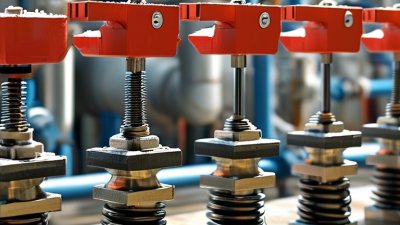
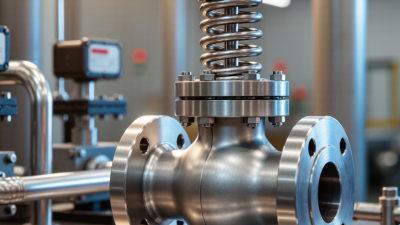
A spring return valve is a valve fitted with an actuator and a mechanical return spring. The spring moves the valve to a preset position when control power disappears. That position may be normally open or normally closed. It depends on the process safety requirement.

During normal operation, compressed air or an electric motor turns the actuator shaft. The shaft rotates a ball or butterfly disc, controlling fluid flow through the pipeline. When the signal stops, stored spring energy drives the shaft back. The movement is automatic and does not depend on a second command. It works quickly. That matters during pump failure, overheating, or signal loss.

In practical installations, technicians check the fail position before connecting the valve. A wrong setting can create serious process problems. Buyers should review torque ratings, pressure limits, temperature range, seal material, and cycle-test records. A valve may look robust but still perform poorly with abrasive media or frequent cycling. Stainless steel bodies suit many demanding environments, while compatible elastomers protect sealing performance. At around 6 bar air pressure, the actuator must still overcome pipeline friction and valve torque.

Maintenance teams should inspect spring fatigue, shaft alignment, air leakage, and unusual movement. I have found that skipped inspections often cause more trouble than the valve design itself. No spring lasts forever. Reliable suppliers should provide clear drawings, test data, traceable materials, and practical installation guidance. These details help global buyers compare equipment beyond price.

Key Criteria for Comparing Global Spring Return Valve Suppliers

5 Best Spring Return Valve Suppliers for Global Buyers

Key Criteria for Comparing Global Spring Return Valve Suppliers

The global industrial valve market is expanding steadily. MarketsandMarkets estimates growth from about USD 78.2 billion in 2023 to USD 100.4 billion by 2028. This growth increases supplier choice, but comparison becomes harder. I would assess five practical areas: safety compliance, testing, materials, delivery capability, and lifecycle cost. Look for documented conformity with relevant ISO standards. Ask for batch traceability, pressure-test records, and actuator cycle results. A polished brochure is not enough.

Test it cold.

Material selection should match the medium, temperature, and installation environment. Stainless steel may resist corrosion, while reinforced polymers can reduce weight. The correct spring torque also matters during power loss. Suppliers should provide torque curves, fail-position details, and operating limits.

According to the International Energy Agency’s World Energy Investment 2024 report, global energy investment is expected to exceed USD 3 trillion. That scale raises demand for dependable flow-control components and stronger supply planning.

Confirm production capacity, spare-part availability, and realistic lead times. Regional warehouses can reduce delays, but they may increase inventory costs.

Not perfect, but revealing.

A serious supplier should explain total cost, not only unit price. Compare maintenance intervals, seal replacement, testing fees, packaging, and freight. Request references from similar climates and process conditions. Remote technical support is useful, though response quality can vary sharply. I would score evidence, not promises, and revisit the scoring after field feedback.

Supplier 1: Product Range, Quality Standards, and Export Capabilities

Supplier 1: Product Range, Quality Standards, and Export Capabilities

Supplier 1 offers spring return valves for water, air, gas, and light industrial systems. Its range covers threaded, flanged, and wafer connections. Common materials include brass, stainless steel, and carbon steel. Available sizes should match both compact equipment and larger pipelines. Fit matters. Buyers should confirm pressure ratings, temperature limits, sealing materials, and actuator compatibility before ordering.

From practical sourcing experience, reliable valve performance begins with controlled assembly and repeatable testing. The supplier should provide dimensional drawings, material certificates, pressure-test records, and traceability codes. Quality systems aligned with ISO 9001 can improve consistency, while applicable EN, ASME, or API requirements may support project approval. However, certificates alone do not prove field performance. A sample inspection can reveal uneven threads, weak springs, or rough machining. Small defects matter.

Export capability is equally important for global buyers. Supplier 1 should prepare secure moisture-resistant packaging, clear labels, commercial invoices, packing lists, and accurate product descriptions. It should also understand Incoterms, customs documentation, and destination-specific requirements. Stable production planning helps control lead times, but promised dates can still shift during peak seasons. Buyers should request a realistic schedule, spare-part support, and pre-shipment inspection rights. A broad catalog may look impressive, yet unavailable sizes can create delays. That gap deserves honest discussion.

Supplier 2: Engineering Strength, Customization, and Market Coverage

Supplier 2 stands out through engineering depth, practical customization, and broad market coverage. Its spring return valves are developed for systems that require controlled movement after air or power loss. Engineers typically review pressure, temperature, media, cycle frequency, and installation space before recommending a configuration. This process helps prevent costly mismatches during commissioning.

Customization is a central strength. Buyers can request different body materials, spring ranges, port sizes, seal compounds, and mounting patterns. For demanding applications, the supplier may adjust spring torque and actuator response through prototype testing. Clear drawings and sample units make technical approval easier. Small details matter, such as thread accuracy and access for maintenance. They often decide whether installation is smooth or frustrating.

Market coverage also appears in its support structure. Regional technical teams can assist with selection, documentation, and replacement planning across multiple destinations. Factory testing should include leakage checks, pressure verification, and repeated return cycles. Ask for test records, material information, and traceable quality documents. Do not rely on polished promises alone.

No supplier gets every detail right. That is worth remembering. Some customized orders may require longer lead times or extra validation. Buyers should confirm delivery schedules, spare-part availability, and communication channels before placing large orders. A capable supplier should explain limitations clearly, not hide them. That honesty is often a stronger sign of reliability than an impressive catalog.

Supplier 3: Manufacturing Capacity, Certifications, and Customer Support

Supplier 3 demonstrates the production depth expected by global spring return valve buyers. Its facility uses automated machining cells, pressure-testing benches, and documented assembly procedures. A reported annual capacity of 500,000 units supports recurring orders without sacrificing batch control. Buyers should still request recent production records. Capacity claims can change quickly.

The supplier maintains ISO 9001 quality management certification and provides material certificates for stainless steel, brass, and sealing components. Each valve undergoes leak testing before shipment, with test results linked to a batch number. This traceability helps engineers investigate field issues faster. However, certification alone does not prove consistent performance. Independent audits and sample inspections remain sensible.

Customer support is practical rather than decorative. Technical staff can review drawings, connection standards, pressure ratings, and spring specifications before sampling. Standard inquiries receive replies within one business day, while custom designs require a longer engineering review. The supplier offers installation guidance, replacement-part information, and remote troubleshooting for distributors. Its documentation is generally clear, although some translated instructions need closer editing. That small weakness matters when installers work under time pressure. Trial orders should include drawings, inspection reports, packaging photos, and agreed response times.

5 Best Spring Return Valve Suppliers for Global Buyers - Supplier 3: Manufacturing Capacity, Certifications, and Customer Support
Supplier Category Anonymized spring return valve manufacturer for industrial and building-services applications
Core Product Scope Spring-return actuated valves, valve actuator assemblies, control valves, shut-off valves, and related mounting accessories
Typical Valve Applications Heating, ventilation and air-conditioning systems; water treatment; process automation; fire and smoke control systems; and general fluid-handling equipment
Manufacturing Processes Expected
  • CNC machining for valve bodies, shafts, and precision components
  • Spring forming and controlled heat treatment
  • Actuator assembly and functional testing
  • Pressure, leakage, torque, and endurance testing before shipment
Manufacturing Capacity Not publicly disclosed
Buyers should request monthly production capacity, available assembly lines, lead-time data, and evidence of capacity for repeat or project-based orders.
Customization Capability Customization may include connection size, valve material, actuator torque, spring-return direction, control signal, wiring configuration, sealing material, and surface finish. Engineering drawings and a written specification should be approved before production.
Material Verification For critical applications, buyers should request material certificates for stainless steel, brass, aluminum, carbon steel, elastomers, and spring wire, together with batch or heat-number traceability where applicable.
Quality Management Certification Certificate details not publicly disclosed
Request a current ISO 9001 certificate showing the legal manufacturing entity, certification scope, issuing body, and validity period.
Product Compliance Documents Buyer verification required
Depending on the destination market and application, request applicable declarations of conformity, test reports, pressure ratings, electrical safety documents, electromagnetic compatibility evidence, and hazardous-location documentation when relevant.
Performance Testing Recommended documentation includes pressure and leakage results, actuator torque verification, spring-return timing, operating-temperature limits, cycle testing, and final inspection records for each production batch.
Sample and Pre-Shipment Inspection Pre-production samples and third-party or buyer-appointed inspections should be available by agreement. Inspection points should cover dimensions, materials, functionality, labeling, packaging, and quantity.
Standard Lead-Time Information Not publicly disclosed
Confirm sample lead time, production lead time, tooling time, shipping readiness, and the effect of order quantity or customization on delivery schedules.
Minimum Order Quantity Not publicly disclosed
Obtain separate MOQ terms for standard products, customized products, spare parts, and private-label packaging.
Technical Support Before ordering, confirm access to dimensional drawings, wiring diagrams, installation instructions, operating limits, troubleshooting guidance, spare-parts lists, and application engineering support.
Pre-Sales Communication Evaluate response accuracy, quotation completeness, drawing review capability, response time, and willingness to clarify pressure, temperature, torque, control-signal, and installation requirements.
After-Sales Support Request written procedures for warranty claims, replacement parts, failure analysis, technical complaints, return authorization, and response-time commitments for urgent field issues.
Packaging and Export Readiness Confirm moisture protection, actuator and valve protection, carton labeling, packing-list accuracy, palletization, export documentation, and suitability for long-distance ocean or air transport.
Recommended Buyer Due Diligence Verify the legal entity, factory address, production site, certification validity, reference projects, inspection records, payment details, sample performance, and consistency between the quotation, drawings, and delivered goods.
Overall Assessment Potentially suitable for global buyers when the supplier can provide verifiable manufacturing-capacity data, valid certification records, complete product testing documentation, and clearly defined technical and after-sales support.

Conclusion

A spring return valve is designed to control fluid or air flow and automatically return to its default position when the actuator loses power or signal. This fail-safe function makes it valuable in industrial automation, process control, water treatment, energy, and other demanding applications. When comparing global suppliers, buyers should examine valve materials, pressure and temperature ratings, actuation performance, manufacturing consistency, quality standards, certifications, delivery reliability, and after-sales service.

The best supplier depends on the buyer’s specific operating conditions and project requirements. One supplier may stand out through a broad product range, strong export capabilities, and internationally recognized quality systems. Another may offer advanced engineering, customized solutions, and extensive market coverage, while a third may provide high manufacturing capacity, comprehensive certifications, and responsive customer support. Before making a decision, buyers should verify technical compatibility, customization options, production lead times, documentation, warranty terms, and long-term service capabilities to ensure a reliable spring return valve supply.