How to Choose the Right Solenoid Valve for Your Needs?
Choosing the right solenoid valve for your specific needs is crucial in many industries. The global solenoid valve market was valued at approximately $3.5 billion in 2022 and is projected to grow significantly. This growth highlights the importance of selecting high-quality solenoid valves that meet operational requirements.
Various factors influence the selection process, such as application type, pressure range, and fluid compatibility. A poorly chosen solenoid valve can lead to inefficiencies, increased costs, and operational failures. For example, in the automotive industry, nearly 30% of valve failures are attributed to improper selection. This statistic underlines the need for a thorough understanding of specifications.
Each application may require unique features in a solenoid valve. Users must consider factors like response time and power consumption. Without careful evaluation, one might overlook crucial details, leading to suboptimal performance. The balance between cost and reliability is often challenging to navigate, necessitating expertise in solenoid valve specifications.

Understanding Solenoid Valves: Types and Applications
Solenoid valves are crucial in various industries. Their primary purpose is to control fluid flow. Understanding the types and applications helps in choosing the right one.
There are several types of solenoid valves, including direct acting and pilot-operated. Direct acting valves are suitable for low-pressure applications. They have a simple design and are easy to install. According to a recent industry report, nearly 65% of manufacturers prefer direct acting valves for small systems due to their reliability and efficiency.
Pilot-operated valves, on the other hand, are ideal for high pressure and larger systems. They tend to use less power, making them more cost-effective over time. Recent data indicates that pilot-operated valves account for around 40% of the solenoid valve market share. This is significant given the growing demand for energy-efficient solutions across industries.
When selecting a solenoid valve, consider factors such as media type, pressure ratings, and temperature range. These aspects heavily influence performance. Understanding these details can prevent costly mistakes and inefficiencies. A poorly chosen valve may lead to frequent repairs and downtime. Hence, thorough research is essential before making a decision.
Key Factors to Consider When Choosing a Solenoid Valve
Choosing the right solenoid valve requires careful consideration of several key factors. Start with the application requirements. Different applications demand specific flow rates, pressures, and temperatures. Understanding these parameters is vital for perfect compatibility. Failure to match a valve’s specifications with application needs can lead to inefficiencies.
Another important factor is the valve's fluid compatibility. Know the media that will flow through the valve. Are they corrosive, viscous, or clean fluids? Use materials that resist deterioration. This prevents leaks and failures. Selecting the wrong materials may lead to premature wear, resulting in costly downtime.
Lastly, consider installation space. Some valves have larger dimensions and different mounting styles. Assess the available space and ensure the valve fits without restricting flow. A good installation may also require easy accessibility for maintenance. Balancing all these factors can seem overwhelming. Take time to evaluate them methodically. Making assumptions could lead to mishaps. The right choice enhances system reliability and performance.
Evaluating Fluid Characteristics for Valve Selection
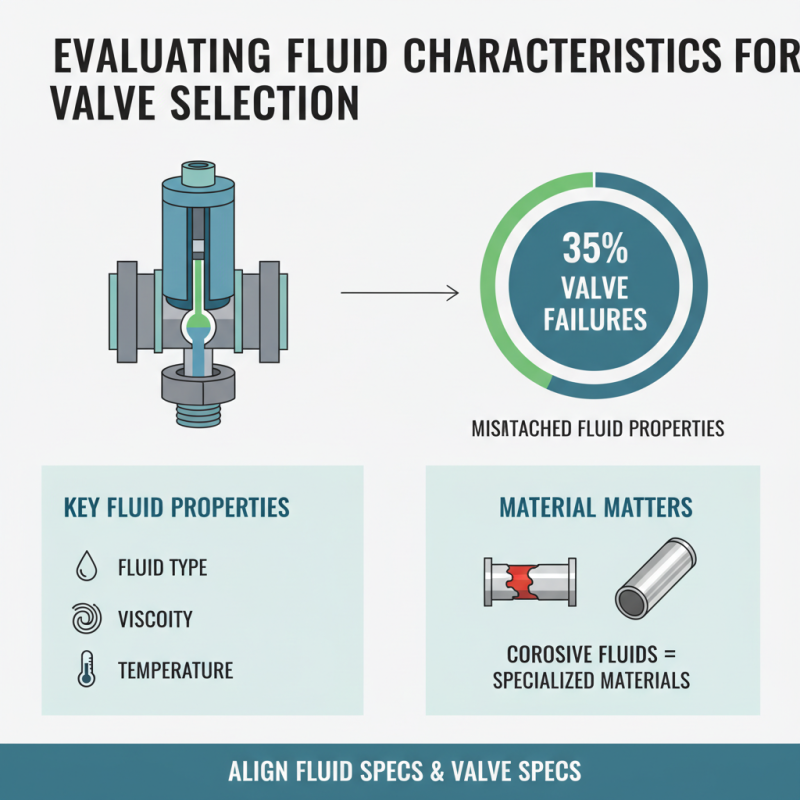
When choosing a solenoid valve, evaluating fluid characteristics is crucial. Fluid type, viscosity, and temperature must align with the valve's specifications. According to a recent industry report, roughly 35% of valve failures are linked to mismatch in fluid properties. Understanding the fluid's composition is essential. For example, corrosive fluids require specialized materials to prevent degradation.
Viscosity plays a critical role too. Higher viscosity fluids create additional resistance. A valve designed for low-viscosity applications may struggle, leading to malfunction. The American Society of Mechanical Engineers (ASME) notes that 25% of flow-related issues arise from inadequate valve selection based on viscosity. It highlights the need for thorough evaluation.
Temperature is another factor that impacts performance. Each solenoid valve has an operating temperature threshold. Operating outside these limits can lead to failure. As temperatures rise, materials can soften or deform. A study from the Fluid Power Journal found that up to 40% of fluid control failures stem from improper thermal considerations. A comprehensive assessment of these fluid characteristics ensures reliable valve operation.
Assessing Voltage and Power Requirements for Solenoid Valves
When selecting a solenoid valve, understanding voltage and power requirements is crucial. Different applications demand specific voltage levels. Common solenoid valve voltages include 12V, 24V, and 120V. For instance, low-voltage options often suit automotive systems, while higher voltages work for industrial settings. It's essential to match the voltage to your power supply to ensure optimal performance.
Power consumption affects efficiency. A solenoid valve's wattage denotes how much energy it requires to operate. Lower wattage means less energy use, essential for applications demanding continuous operation. However, a higher wattage may be necessary for valves that need rapid activation. This trade-off is vital and requires careful consideration based on the frequency of use.
Moreover, it's important to evaluate the application's environmental conditions. Solenoid valves may operate in various temperatures or humidities. Voltage ratings can be affected by these factors. Underestimating power requirements can lead to failure. Ensure your choice not only meets the voltage and wattage needs but can endure the conditions in which it will operate. This approach will enhance reliability and performance, minimizing the risk of operational issues.
Installation and Maintenance Considerations for Solenoid Valves
When considering installation and maintenance for solenoid valves, several factors are crucial. Proper installation ensures the valve functions effectively. Always follow the manufacturer's guidelines. Keeping the valve clean can extend its lifespan. According to industry analysis, nearly 30% of solenoid valve failures result from poor maintenance practices.
Regular inspections play a vital role in maintaining solenoid valves. Check for wear and tear, as this can indicate an impending failure. Experts recommend a visual inspection every three months. A report from the Fluid Control Industry Association highlights that routine maintenance can improve efficiency by up to 20%. Even small issues, if left unchecked, can lead to significant problems.
It is essential to consider the environment where the solenoid valve operates. Harsh conditions can impact performance. For instance, high temperatures or corrosive substances can damage the valve. Using the right material for the application is vital. In situations where conditions vary, adjustable solenoid valves may offer a better solution. Addressing these considerations can help avoid costly outages and improve overall system reliability.
Solenoid Valve Selection Criteria