A forklift actuator rarely fails without leaving clues. Slow mast movement, uneven lifting, or a sudden hydraulic pause can signal trouble. In busy warehouses, these symptoms are easy to dismiss as normal wear. That mistake can become expensive.
A Forklift Actuator converts hydraulic, electric, or mechanical energy into controlled movement. Its failure may involve worn seals, contaminated fluid, loose wiring, overloaded components, or poor alignment. During a practical inspection, technicians should check fluid leaks around the rod, listen for unusual pump noise, and compare movement under a safe, rated load. A warm actuator housing can also indicate friction or internal bypassing. Small details matter.
Not every fault is obvious.
Reliable diagnosis requires more than replacing the actuator immediately. Maintenance records, operating conditions, service intervals, and the forklift’s load history can reveal the real cause. A technician should follow the manufacturer’s service manual and use suitable test equipment before making adjustments. Pressure readings can help, but they must be interpreted correctly. A faulty valve or damaged hose may imitate actuator failure.
Some early assumptions can be wrong. A clean exterior does not prove internal health. Likewise, a recently serviced forklift may still contain contaminated fluid. This guide examines the common reasons a Forklift Actuator fails, how professionals confirm each possibility, and which maintenance decisions reduce repeat breakdowns. Safety remains central, because unstable lifting equipment can endanger operators, products, and nearby workers.
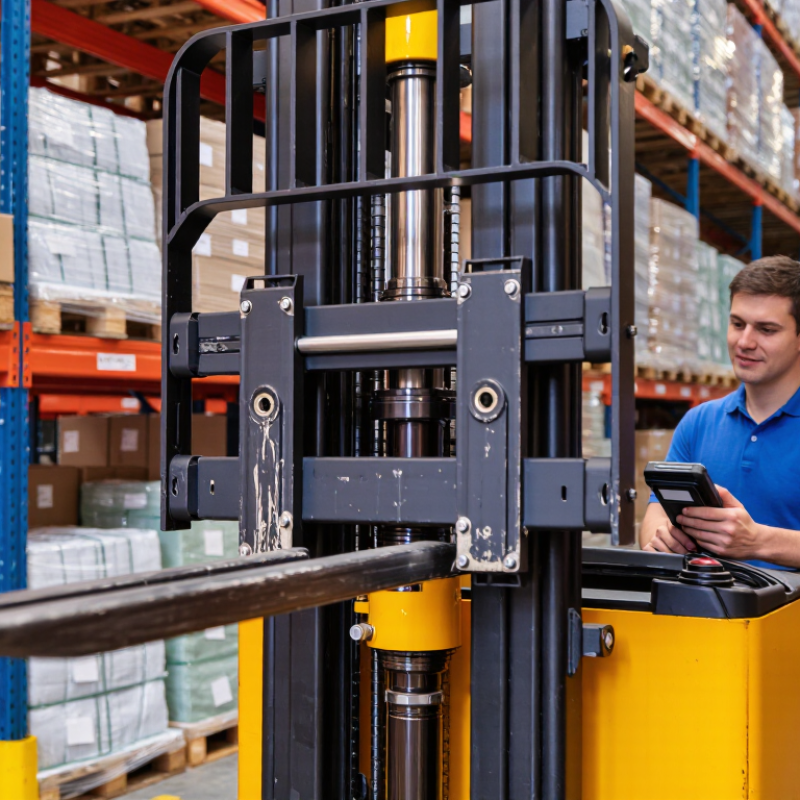
Why Is My Forklift Actuator Failing?
A forklift actuator converts hydraulic pressure or electrical commands into controlled movement. It may raise the mast, tilt the carriage, or position the forks. Without this component, lifting becomes slow, uneven, or impossible. The actuator also helps the operator place loads accurately in tight spaces. That affects productivity and workplace safety.
Common failure signs include leaking fluid, unusual noise, drifting forks, and jerky movement. A bent rod can damage seals and create internal pressure loss. Contaminated hydraulic fluid may scratch polished surfaces inside the cylinder. Electrical actuators can suffer from worn gears, loose connections, or overheated motors. Check the load rating, fluid level, hoses, and mounting points before replacing anything. A simple loose fitting sometimes looks like a major actuator failure.
I have found that temperature often changes the diagnosis. Cold fluid can make a healthy system seem weak. Heat can expose worn seals that appear normal during a brief inspection. However, guessing is risky. Record the lifting speed, noise, load weight, and operating temperature. Compare those details with maintenance records and the equipment manual. Never place hands near a pressurized leak. A trained technician should isolate the power source, support raised components, and test pressure with suitable equipment. Even experienced mechanics can miss a small alignment problem.
| Actuator or Related Assembly | Primary Function | Why It Matters | Common Failure Causes | Typical Warning Signs | Basic Inspection Points | Potential Risk | Recommended Response |
|---|---|---|---|---|---|---|---|
| Lift Hydraulic Cylinder | Converts hydraulic pressure into linear movement to raise and lower the carriage and forks. | Provides the vertical lifting force required to handle loads at different elevations. | Worn piston seals, damaged or corroded rod, contaminated hydraulic oil, excessive side loading, or overloading. | Forks drift downward, slow lifting, uneven movement, visible oil leakage, or a hydraulic pump that runs longer than usual. | Check the cylinder rod for scoring or rust, inspect seals and hose connections for leakage, and compare movement with the manufacturer's limits. | Uncontrolled lowering, dropped loads, or loss of rated lifting capacity. | Stop using the truck if leakage or load drift is significant. Depressurize the system and have the cylinder and hydraulic circuit inspected by a qualified technician. |
| Tilt Hydraulic Cylinder | Moves the mast forward or backward to position and stabilize a load. | Maintains load control during pickup, transport, stacking, and retrieval. | Internal seal wear, bent rod, loose mounting pins, damaged bushings, contaminated fluid, or incorrect hydraulic pressure. | Mast creeps forward or backward, jerky tilting, excessive free play, oil leakage, or difficulty holding a load at a selected angle. | Inspect cylinder rods, pivot pins, bushings, mounts, hoses, and hydraulic fluid condition. Check for abnormal movement with the forks unloaded. | Load instability, mast movement, or a load sliding from the forks. | Keep the load low and stop operation if the mast cannot hold its position. Repair the cylinder, mounting hardware, or hydraulic controls before reuse. |
| Side-Shift Hydraulic Actuator | Moves the fork carriage laterally without repositioning the entire truck. | Improves load alignment and reduces the need for repeated truck repositioning in narrow operating areas. | Seal failure, bent actuator rod, damaged carriage bearings, restricted hydraulic flow, or operation beyond the attachment's rated capacity. | Slow or incomplete side-shift movement, movement in only one direction, hydraulic leakage, or carriage drift under load. | Inspect the actuator, carriage guides, rollers, attachment hoses, quick couplers, and hydraulic flow. Verify that the attachment is correctly mounted. | Misaligned loads, uneven fork loading, or attachment movement during handling. | Do not compensate by increasing pressure beyond specifications. Correct mechanical binding or hydraulic faults and verify attachment capacity. |
| Fork Positioning Actuator | Adjusts the spacing between forks, usually through a hydraulic attachment mechanism. | Allows the forks to match pallet openings and load width while maintaining balanced support. | Hydraulic leaks, worn guides, bent fork shafts, contaminated oil, unequal flow, or poor lubrication of mechanical sliding surfaces. | Forks move unevenly, fail to hold their spacing, bind during adjustment, or show excessive side-to-side movement. | Inspect fork locks, guide surfaces, hydraulic connections, actuator mounting points, and the fork heels for cracks or deformation. | Unbalanced loads, fork disengagement, or damage to the pallet and load. | Remove the attachment from service when fork spacing cannot be maintained. Repair the actuator and inspect the complete fork-positioning assembly. |
| Electric Linear Actuator | Provides controlled linear movement for electrically operated accessories or auxiliary mechanisms on some forklift designs. | Enables precise adjustment where hydraulic actuation is not used or where an electrically controlled function is required. | Overload, moisture ingress, damaged wiring, worn gears, limit-switch failure, voltage drop, or loss of lubrication. | Slow operation, clicking or grinding, intermittent response, failure to reach the end position, overheating, or repeated fuse operation. | Inspect connectors, cables, mounting alignment, current draw, actuator housing, and end-stop operation. Isolate electrical power before service. | Unexpected movement, loss of attachment function, or electrical overheating. | Disconnect power before inspection. Replace damaged wiring or the actuator as required, and do not bypass overload protection or limit switches. |
| Hydraulic Control Valve Actuator or Solenoid | Commands hydraulic oil flow to a cylinder or attachment by moving a spool or opening an electrically controlled valve. | Controls the direction, speed, and availability of actuator movement. | Coil failure, low voltage, damaged wiring, contaminated oil, stuck spool, worn seals, or a faulty switch or controller. | The actuator does not move, moves only in one direction, responds intermittently, or operates with a delay. | Check electrical supply, connectors, coil resistance, valve cleanliness, hydraulic pressure, and control input signals according to the service procedure. | Unexpected movement or complete loss of a critical hydraulic function. | Use qualified electrical and hydraulic personnel for diagnosis. Do not manually force a valve or operate with defective controls. |
| Actuator Rod, Seal, and Mounting Hardware | Transfers actuator force to the moving assembly while maintaining alignment and containing hydraulic pressure where applicable. | Maintains smooth, controlled movement and prevents structural or hydraulic failure. | Corrosion, impact damage, misalignment, loose retaining hardware, worn bushings, improper installation, or insufficient lubrication. | Visible scoring, bent components, unusual noise, fluid seepage, excessive play, or movement that is jerky or off-center. | Inspect rod straightness and surface finish, seal condition, pin retention, bushings, welds, and alignment under unloaded conditions. | Actuator separation, sudden loss of control, or damage to the mast or attachment. | Do not straighten, weld, or modify load-bearing parts without approved procedures. Replace defective components and verify alignment before operation. |
| Hydraulic Hoses and Fittings | Carry pressurized fluid between the control valve, actuator, and hydraulic power unit. | Allow the actuator to receive the pressure and flow needed for reliable movement. | Abrasion, aging, twisting, loose fittings, incorrect routing, heat exposure, pressure spikes, or incompatible replacement parts. | Wet or damaged hose surfaces, pinhole leaks, bubbles, slow movement, pressure loss, or fluid sprayed near connections. | Inspect hose routing, clamps, abrasion points, fittings, protective sleeves, and leakage. Never search for a hydraulic leak with bare hands. | High-pressure injection injury, fire risk, environmental contamination, or actuator failure. | Shut down and relieve pressure before tightening or replacing components. Replace damaged hoses with correctly rated parts. |
| Hydraulic Oil and Filtration System | Transmits force, lubricates components, removes heat, and carries contaminants to the filter. | Clean fluid supports consistent actuator speed, seal life, valve operation, and system pressure. | Incorrect oil, water contamination, dirt, degraded fluid, low fluid level, blocked filter, or missed maintenance intervals. | Noisy hydraulics, foaming, sluggish movement, overheating, valve sticking, accelerated seal wear, or repeated actuator problems. | Check fluid level and appearance, inspect for water or particles, verify filter condition, and follow the equipment manufacturer's fluid specification. | Premature actuator wear, unreliable movement, and damage to pumps or control valves. | Identify and remove the contamination source. Replace fluid and filters using the approved maintenance procedure rather than simply topping up. |
| Load-Sensing or Position Feedback Sensor | Reports pressure, position, or operating status to a control system where electronic monitoring is fitted. | Helps the truck control or display system detect abnormal conditions and manage actuator operation. | Broken wiring, connector corrosion, sensor misalignment, calibration drift, contamination, or physical impact. | Warning codes, incorrect position readings, restricted operation, intermittent actuator response, or a function that stops before its expected position. | Inspect sensor mounting and wiring, read diagnostic codes, compare feedback with actual movement, and test signals using the approved procedure. | Incorrect control decisions or unexpected limitation of the actuator function. | Repair the wiring or replace and calibrate the sensor as specified. Do not ignore warning codes related to load or position control. |
Safety note: Actuator faults can affect load control and may create stored hydraulic or electrical energy. Lower the load, isolate the truck, apply the parking brake, follow the manufacturer's lockout procedure, and use qualified service personnel for repairs. Never place any part of the body beneath an unsupported raised load or carriage.


©Copyright 2020 Gosco Valves. All rights reserved.