Top 10 Valve Packing Tips for Efficient Sealing Solutions?
In industrial applications, valve packing plays a crucial role in ensuring the efficiency and safety of fluid control systems. According to a report by the American National Standards Institute (ANSI), nearly 70% of all valve failures are related to packing issues. This highlights the need for proper sealing solutions to optimize performance. Effective valve packing can minimize leaks, reduce maintenance costs, and enhance overall system reliability.
Industry experts emphasize the importance of selecting the right packing material. Each application may require different properties, such as chemical resistance or temperature tolerance. A study from the Fluid Sealing Association (FSA) found that poor packing choices can lead to increased downtime, impacting production. Engineers must evaluate their specific requirements to achieve the best results.
However, challenges remain. Not all valve packing installations adhere to best practices, leading to inefficiencies. Many employees lack training on proper techniques, resulting in premature wear and tear. By focusing on the most effective methods for valve packing, companies can unlock significant improvements in their operations. As the industry evolves, a commitment to continuous learning is essential for success.

Essential Materials for Effective Valve Packing Solutions
When it comes to effective valve packing solutions, the choice of materials is crucial. Commonly used materials include PTFE, graphite, and aramid fibers. Each material has unique properties. For instance, PTFE offers excellent chemical resistance, making it ideal for aggressive environments. Graphite, on the other hand, provides superior thermal performance. It can handle high temperatures but may require special handling due to its flaky nature.
Proper installation is also essential for achieving the best sealing results. Too often, installers overlook the importance of proper torque settings. An improper torque can lead to leaks or excessive wear. Packing must be compressed evenly around the valve stem. Failures often arise from uneven packing, which leads to early wear and valve damage. Regular inspections can help catch issues early, but they are not always performed consistently.
Experience shows that trial and error can teach valuable lessons about different materials. Some applications may benefit from a hybrid approach, combining materials for enhanced effectiveness. Documenting performance over time can provide insights into the best choices for specific environments. Reflecting on previous installations can uncover patterns and trends that improve future projects, leading to better sealing solutions overall.
Understanding Valve Packing Types and Their Applications
Valve packing plays a crucial role in achieving reliable sealing solutions. Understanding the different types of valve packing can enhance operational efficiency in various applications. For example, PTFE packing is widely used due to its chemical resistance and high-temperature stability. According to a report by the Fluid Sealing Association, nearly 60% of industries prefer PTFE for their sealing needs.
Another common type is graphite packing. It excels in high-temperature applications where other materials may fail. Reports indicate that graphite packing can endure temperatures up to 450°C, making it suitable for power generation and petrochemical industries. However, it is essential to monitor its wear and performance regularly, as degradation can lead to leaks.
Additionally, elastomeric packing offers flexibility in sealing multiple shapes. While they are effective for low-pressure applications, they may not provide the best long-term reliability under extreme conditions. Choosing the right type often requires balancing initial costs with potential maintenance needs. Understanding the strengths and limitations of each type ensures better decision-making in valve packing selection.
Top 10 Valve Packing Types and Their Applications
This bar chart illustrates the efficiency and application prevalence of different valve packing types used in sealing solutions. Each type is evaluated based on its common usage in industrial applications.
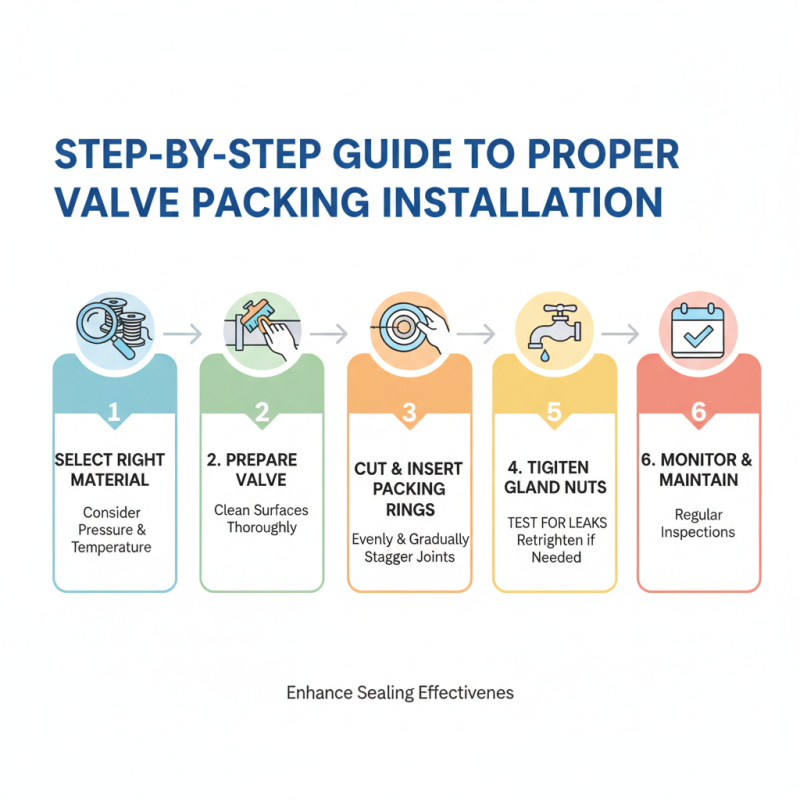
Step-by-Step Guide to Proper Valve Packing Installation
When installing valve packing, proper techniques can greatly enhance sealing effectiveness. Start by selecting the right packing material. Different applications require different materials. Consider factors like pressure and temperature. Once the material is chosen, prepare the valve. Clean the surfaces thoroughly to eliminate debris. Any residue can compromise the seal.
Next, cut the packing to the correct length. It should fit snugly but not cause excessive compression. Installing layers can be beneficial. Each layer should be placed uniformly. Take care not to twist the packing while inserting it, as this can lead to uneven sealing. When tightening the gland, apply pressure gradually. Over-tightening can damage both the packing and the valve.
After installation, monitor for leaks. This step is crucial for identifying issues early. Reflect on the installation process. Were there any challenges faced? Was the packing material suitable? Each installation offers lessons that can improve future efforts. Proper valve packing is key to efficiency and longevity in system operations.
Common Mistakes to Avoid in Valve Packing Procedures
Packing valves correctly is crucial for efficient sealing. However, many overlook common mistakes that can lead to performance issues and equipment failures. Data from industry reports show that improper valve packing can reduce sealing effectiveness by over 30%, leading to increased maintenance costs and unplanned downtime.
One common mistake is over-tightening the packing. This can lead to excessive friction and wear on packing rings. It's important to apply just the right amount of pressure. Always check the manufacturer's guidelines for torque specifications. Another error happens when the packing is misaligned. Ensuring that each packing ring is installed evenly prevents leaks and extends valve life.
Regular inspections and maintenance schedules can help identify packing issues before they escalate. Consistent monitoring will improve overall valve performance. Validate that all components are suitable for the specific fluid types involved. This is an essential step. Remember, effective packing not only enhances performance but also increases safety in operations.
Maintenance Tips for Extending the Life of Valve Packing
Maintaining valve packing is critical for ensuring efficient sealing solutions. Regular inspections are essential. Check for signs of wear or fraying. Gaps or leaks can indicate that replacement is necessary. Timely action can prevent wider issues.
Use the right tools for installation. Over-tightening can damage packing materials. Conversely, under-tightening may lead to leaks. Adjusting based on pressure and temperature helps prolong packing life. Monitor the system frequently, especially in high-stress environments.
Don’t underestimate the importance of lubrication. Proper lubricants can reduce friction. In many cases, this extends the life of valve packing. However, finding the right balance is crucial. Excessive lubrication can attract dirt. This dirt may lead to faster wear of the packing. Regularly reassess your approach to maintenance, seeking ways to improve.