Choosing a reliable China supplier for a Mechanical Seal For Water Pump requires more than comparing prices. Water quality, pump speed, temperature, pressure, and shaft size all affect seal performance. A supplier experienced with municipal systems may not suit chemical processing equipment. This difference matters.
A strong manufacturer should provide material options, including ceramic, silicon carbide, carbon, stainless steel, and elastomers. Each selection should match the fluid and operating conditions. Product drawings, tolerance data, testing records, and installation guidance can reveal genuine technical capability. Ask whether the factory performs pressure testing and dimensional inspection before shipment. Small details often prevent large failures.
Look for suppliers with stable production, traceable components, and responsive engineering support. Factory audits, sample orders, and customer references offer practical evidence. Certifications may help, but certificates alone do not prove consistent quality. That assumption needs examination. A polished website is not enough.
Real-world experience also matters. A seal running continuously beside a hot pump casing faces different stress from one used in a cool water tank. Packaging should protect polished faces from dust, impact, and moisture during transport. Clear communication about drawings and tolerances reduces costly misunderstandings.
This guide examines leading Chinese suppliers through product quality, customization, delivery reliability, technical service, and after-sales support. It also considers where supplier claims may require verification. No manufacturer fits every application. Careful selection remains essential. Even a minor mismatch can cause leakage, vibration, downtime, and premature replacement.
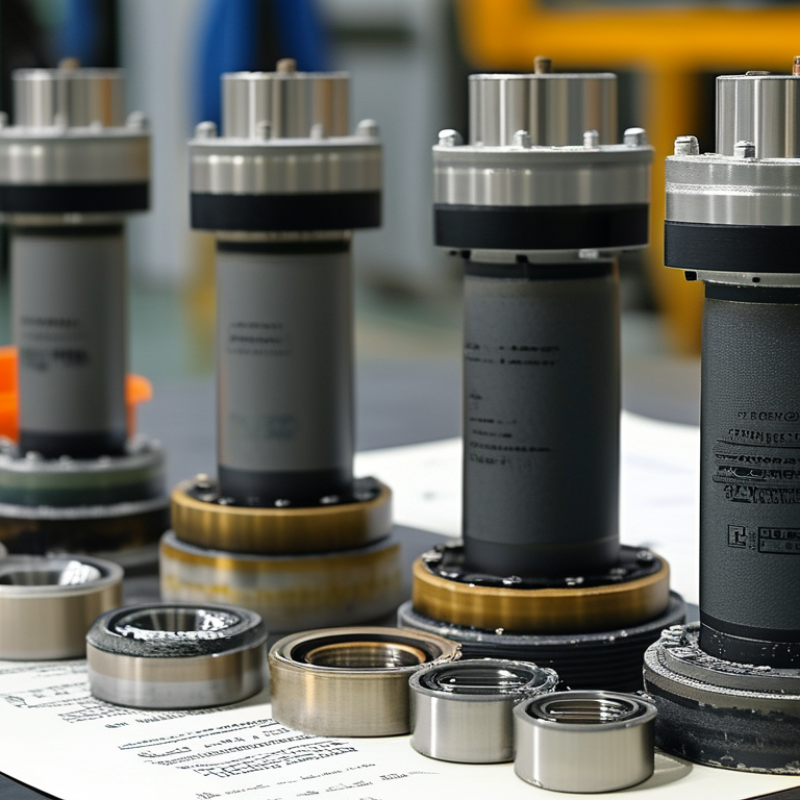
A mechanical seal prevents water from escaping where the rotating shaft leaves the pump casing. It uses two finely finished faces, usually carbon and ceramic or silicon carbide. A spring pushes these faces together. A thin water film reduces friction and heat. The seal also contains elastomers, a spring, and secondary sealing parts.
Selection depends on more than pump size. Water temperature, pressure, shaft speed, suspended particles, and chemical treatment all matter. Clean water may suit carbon and ceramic faces. Abrasive water often needs harder materials. Incorrect alignment can create a narrow leakage line around the shaft. A small mistake matters.
The U.S. Department of Energy’s Improving Pumping System Performance sourcebook reports that pumping systems may represent 25% to 50% of industrial facility electricity use. A leaking seal can waste water and increase maintenance, although the seal itself is rarely the largest energy loss. ANSI/HI 9.6.3 guidance also stresses operating pumps near their preferred range, which helps reduce vibration and seal wear. In field inspections, checking dry running, shaft runout, and installation damage is essential. The choice is not always elegant. A lower-cost seal may perform well in clean water, but fail quickly under heat, grit, or frequent starts. Reliable suppliers should provide material certificates, dimensional drawings, pressure limits, and test records.
Choosing a reliable mechanical seal supplier in China requires understanding seal types and material performance. Water pumps commonly use single mechanical seals because they are compact, economical, and suitable for clean water. Double seals provide better protection when water contains chemicals, solids, or elevated temperatures. Cartridge seals reduce installation errors because the spring and faces arrive preassembled. However, they may cost more.
Material selection affects service life. Carbon versus ceramic faces work well in many standard water applications. Silicon carbide handles abrasive particles and dry-running risks more effectively. Tungsten carbide offers strong wear resistance under demanding conditions. For secondary seals, EPDM suits hot water and many mild chemicals, while NBR performs well with general water and oil exposure. Fluoroelastomers tolerate higher temperatures, but they are not automatically the best choice. Compatibility must be checked carefully.
Tips: Check water temperature, pressure, shaft speed, and suspended solids before ordering. Ask for face-flatness data, spring material, and pressure-test records. During installation, keep the faces clean and avoid touching them with oily gloves. A small scratch can cause leakage. In practical pump inspections, incorrect elastomer selection causes many early failures. I have also seen technically correct seals fail because the shaft was worn. Material choice matters, but equipment condition matters too.
Material selection strongly affects the service range of a mechanical seal. The values below represent typical upper continuous-use temperatures for common sealing materials and may vary with fluid type, pressure, speed, compound formulation, and equipment design. Always verify the manufacturer's technical data before selection.
China Top Mechanical Seal for Water Pump Suppliers?
Chinese suppliers design mechanical seals around water quality, pressure, temperature, and shaft speed. Engineers usually begin with application data, not a standard catalogue drawing. They select silicon carbide, carbon, ceramic, or tungsten carbide faces after checking abrasion and corrosion risks. Elastomers are matched to fluid temperature and chemical exposure. Small details matter. A misaligned shaft can quickly damage both faces.
Manufacturing often combines CNC turning, precision grinding, lapping, laser inspection, and controlled assembly. Many factories measure face flatness in light bands or micrometres before assembly. Dynamic tests then simulate leakage, pressure changes, and continuous rotation. ISO 3069 supports dimensional consistency, while API 682 offers broader guidance for seal systems in demanding services. These standards improve discipline, but they do not replace practical testing.
The 2023 Grand View Research report estimated the global mechanical seals market at approximately US$4.3 billion, with continued growth expected through 2030. A MarketsandMarkets report also identifies water and wastewater treatment as a major application area. This demand encourages Chinese manufacturers to improve material traceability and automated inspection. Yet no factory is flawless. Batch variation, incomplete test records, and overly optimistic service claims still deserve scrutiny. Buyers should request inspection data, pressure-test results, material certificates, and samples from the intended production line. A polished brochure proves very little.
| Design or Manufacturing Dimension | Typical Data or Specification | Why It Matters for Water Pumps | Common Verification Method |
|---|---|---|---|
| Primary sealing faces | Carbon versus silicon carbide; tungsten carbide may be selected for abrasive service. | The face combination controls wear resistance, friction, heat generation, and resistance to suspended particles. | Flatness and surface finish inspection; visual inspection; dimensional inspection; running leak test. |
| Secondary elastomer | EPDM is commonly used for water service; NBR is commonly used for general water and oil-contact applications; FKM is selected for higher-temperature or chemical resistance. | Elastomer selection affects compatibility with water chemistry, glycol mixtures, oils, temperature, and cleaning agents. | Material identification, hardness testing, dimensional checks, and immersion or compatibility testing when required. |
| Metal components | Stainless steel grades such as 304 or 316 are frequently considered; the final grade depends on chloride level, temperature, and fluid chemistry. | Corrosion-resistant metal parts help maintain spring force, dimensional stability, and service life. | Positive material identification, chemical composition review, corrosion inspection, and dimensional inspection. |
| Typical shaft diameter range | Approximately 10–100 mm for common industrial water-pump seal designs; larger equipment may require custom dimensions. | Shaft diameter determines the seal size, rotating mass, spring arrangement, and fit within the pump chamber. | Calibrated measurement of shaft, housing, face height, and installation dimensions. |
| Typical operating temperature | Common water-service designs are often specified around −20°C to 120°C, subject to the selected elastomer, face materials, pressure, and speed. | Temperature changes elastomer properties, lubricant-film behavior, face distortion, and allowable operating speed. | Temperature-controlled endurance testing and review of material supplier data. |
| Typical pressure capability | Approximately 1.0–2.5 MPa for many standard balanced designs; the actual limit depends on speed, face diameter, pressure direction, and design geometry. | Pressure influences face loading, leakage rate, heat generation, and the need for a balanced seal design. | Hydrostatic pressure testing, dynamic pressure testing, and leakage monitoring. |
| Rotational speed | Common pump applications may operate from approximately 1,450 to 3,600 rpm; allowable speed must be confirmed against seal diameter and balance ratio. | Higher speed increases centrifugal forces, frictional heat, and sensitivity to shaft runout or vibration. | Dynamic test at specified speed, vibration monitoring, temperature monitoring, and leakage measurement. |
| Hydraulic balance ratio | Balanced designs commonly use a balance ratio below 1.0; the selected value is calculated from pressure, speed, face loading, and lubrication conditions. | Balancing reduces face loading and frictional heat in higher-pressure or higher-speed service. | Engineering calculation followed by pressure, speed, temperature, and leakage testing. |
| Spring arrangement | Single-spring, multi-spring, or wave-spring arrangements may be used; stationary springs are preferred in some high-speed or particle-laden applications. | The spring system maintains face contact while accommodating axial movement and helps control sensitivity to clogging. | Spring force measurement, free-height inspection, torque verification, and dynamic testing. |
| Manufacturing process | Typical steps include material inspection, precision machining, lapping, cleaning, component inspection, controlled assembly, and final testing. | Process control reduces face distortion, contamination, dimensional variation, and early leakage. | Documented work instructions, in-process inspection, cleanliness controls, batch traceability, and final quality records. |
| Seal-face flatness and finish | Precision lapping is used to produce a controlled sealing surface; the required flatness and roughness depend on the face materials and design. | A stable micro-gap supports a fluid film while limiting visible leakage and wear. | Optical flat or interferometric flatness inspection and calibrated surface-finish measurement. |
| Applicable dimensional standards | EN 12756 is widely referenced for mechanical seal designation and installation dimensions; project-specific pump standards may also apply. | Standardized dimensions improve interchangeability and simplify replacement-seal selection. | Dimensional comparison with the approved drawing, seal designation, and pump installation envelope. |
| Testing and acceptance | Typical checks include appearance, dimensions, spring force, static pressure, dynamic running, leakage, noise, and temperature rise. | Testing confirms that the assembled seal performs under representative operating conditions rather than only passing dimensional inspection. | Inspection plan based on the approved drawing, purchase specification, application conditions, and agreed acceptance limits. |
Note: The values shown are typical engineering reference ranges for water-pump mechanical seals. Actual limits must be confirmed from the approved design, material compatibility data, pump operating conditions, and documented test results.
When sourcing a mechanical seal for a water pump, supplier testing matters as much as material selection. Experienced suppliers should provide dimensional inspection records, pressure-test results, and batch traceability. A seal may look precise, yet a small face defect can cause leakage after installation. Reliable factories check carbon, ceramic, elastomer, and metal components separately. They also verify spring load, face flatness, shaft size, and running tolerance. Ask for documented procedures, not confident promises. Standards alone do not guarantee good workmanship.
Quality testing should reflect actual pump conditions. A practical evaluation includes hydrostatic pressure testing, rotational running tests, temperature checks, and repeated start-stop cycles. Inspectors should record test duration, medium, pressure, speed, and failure observations. For water applications, compatibility with treated or mineral-rich water deserves attention. Corrosion marks around the spring are an early warning. So is uneven wear on the rotating face. In my experience, suppliers sometimes report pass rates without explaining sample size. That gap deserves a question. Testing can be technically correct but still too limited.
Tips: Request a sample report and confirm its test date. Compare measured values with agreed drawings. Visit the production area if possible. Watch how clean components remain before assembly. Ask how rejected seals are isolated and analyzed. Keep installation feedback for later supplier reviews. A supplier willing to discuss one failed test may be more trustworthy than one claiming perfection. Perfection sounds attractive. It can also hide weak inspection.
China’s mechanical seal market is competitive, but price alone rarely identifies quality. Grand View Research estimated the global mechanical seals market at about USD 3.9 billion in 2023, with steady growth expected through 2030. This growth increases supplier choices and quality differences. Compare suppliers by seal design, shaft size, pressure range, temperature limits, and compatible face materials. A seal for clean water may use silicon carbide, carbon, or ceramic faces. Verify the selection against your pump’s actual operating conditions.
Ask for material certificates, dimensional drawings, pressure-test records, and batch traceability. Suppliers familiar with ISO 21049 requirements should explain leakage control, installation limits, and failure testing clearly. The U.S. Department of Energy reports that pumping systems can consume 25–50% of industrial electricity. Poor alignment or leakage can therefore create more than a maintenance problem. Request measured data, not only catalog claims.
Check production consistency through pre-shipment inspection and random sample testing. Review the supplier’s quality system, corrective-action records, and response time for replacement parts. A factory audit should include face lapping, spring assembly, elastomer storage, and final inspection areas. Do not treat a polished showroom as proof. I once underestimated packaging risks; damaged seal faces may look perfect until installation. A small pilot order can expose tolerances, communication gaps, and delivery weaknesses before a larger contract.
1272 Speers Rd Unit 4
Oakville ON Canada L6L 2X4
©Copyright 2020 Gosco Valves. All rights reserved.