Please upgrade your web browser now. Internet Explorer 6 is no longer supported.>

Best High Temperature Solenoid Valve Suppliers in China?

Choosing a high temperature solenoid valve supplier in China requires more than comparing prices. A valve that looks suitable on a product page may behave differently beside a hot pipe, under continuous cycling, or with a demanding process fluid. The details matter: coil insulation class, seal material, body alloy, pressure range, duty cycle, and the temperature rating of the complete assembly. Ask suppliers for datasheets and test evidence that match your actual operating conditions, not just a headline temperature figure.

A useful engineering reminder for this guide is: “Treat temperature as a design limit, not a catalog footnote.” This is an editorial paraphrase, not a verified quotation, informed by the process-control expertise of Dr. David W. Spitzer. That distinction matters; a supplier article should not dress up an invented line as a direct expert quote. It should also admit that no single valve suits every hot-fluid application.

This comparison will help buyers assess Chinese manufacturers by product range, customization, quality controls, technical support, and export experience. Look closely at how each company explains material compatibility and failure limits. A fast reply is useful. Clear evidence is better. Some supplier pages leave gaps, and those deserve follow-up questions rather than optimistic assumptions. The right choice is the valve and supplier that can support the specified temperature, pressure, medium, and service life with verifiable documentation.
Best High Temperature Solenoid Valve Suppliers in China?

What Defines a High-Temperature Solenoid Valve

What Defines a High-Temperature Solenoid Valve

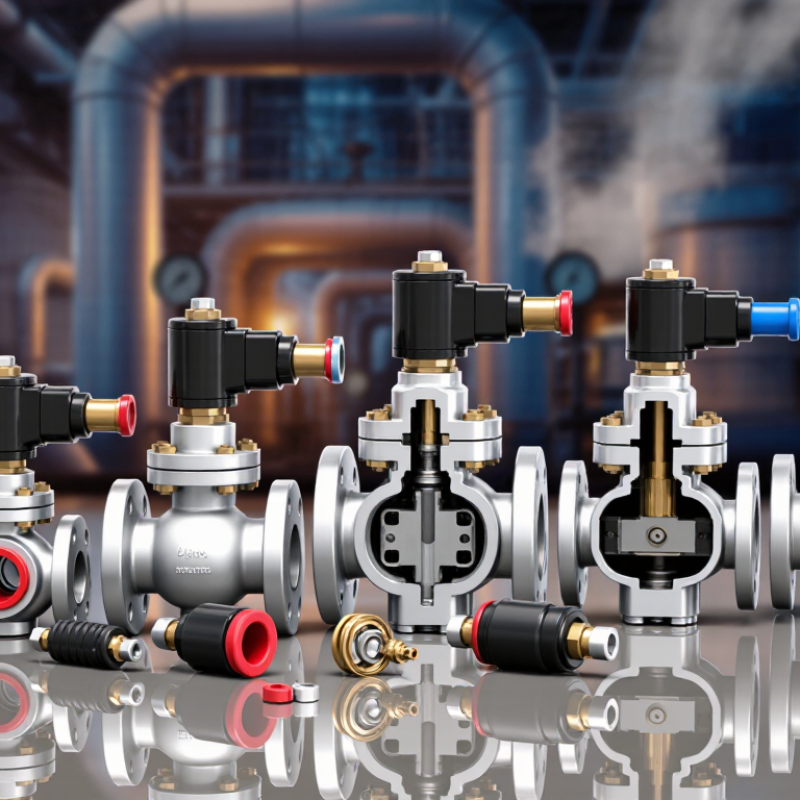
A high-temperature solenoid valve is designed to control fluid reliably when heat exceeds ordinary service conditions. Its rating should cover both the fluid temperature and the surrounding environment. Heat changes everything. It can harden seals, weaken coil insulation, and alter how internal parts move. Materials matter: the body, plunger, spring, and seals must suit the fluid and operating temperature. A metal body alone does not make a valve suitable for hot service.

Look beyond the maximum temperature printed on a specification sheet. Check pressure range, voltage, duty cycle, connection size, and fluid compatibility. Steam, hot oil, and heated water place different demands on seals and internals. A valve that opens correctly during a brief test may behave differently after hours of continuous operation. That detail is easy to miss. For supplier evaluation in China, request complete datasheets and confirm whether ratings refer to continuous or intermittent use.

Tips: Match the valve to measured operating conditions, not just the system’s peak temperature. Ask for seal and coil insulation materials, then verify pressure limits at your actual temperature. If possible, test a sample in the real installation; a neat specification cannot replace field experience.
Common Applications and Operating Conditions

High-temperature solenoid valves are used in steam lines, thermal-oil circuits, industrial ovens, dryers, and heat-treatment equipment. The U.S. Department of Energy’s Improving Process Heating System Performance sourcebook estimates that process heating uses about half of manufacturing energy in the United States. That scale makes reliable flow control important. Steam is unforgiving.

Operating conditions vary sharply by application. A valve serving a washdown line may face frequent cycling, while a furnace fuel or hot-oil circuit may expose its body and coil to sustained radiant heat. Check fluid temperature, pressure, differential pressure, and switching frequency together. Heat at the valve body can differ from the fluid temperature, especially near an oven wall.

Material and installation choices matter. Seal materials must suit the actual medium, and coil insulation needs to tolerate nearby heat. Confirm the temperature rating at the coil, not only at the valve body. A common oversight is specifying peak temperature without recording how long it lasts. That detail can be missed during selection. Leave room for thermal cycling, vibration, and service access, then verify ratings against measured site conditions.

Best High Temperature Solenoid Valve Suppliers in China? - Common Applications and Operating Conditions

Typical application conditions and valve-selection considerations for high-temperature service. Actual limits depend on valve construction, seal material, pressure, duty cycle, and the supplier’s published specifications.

Application Typical Medium Representative Operating Temperature Common Pressure Considerations Valve and Material Considerations Supplier Specification to Check
Industrial steam lines Saturated steam or condensate Approximately 120–180 °C Pressure must match the steam system; saturated-steam pressure rises with temperature. Use a steam-rated body and heat-resistant seals. Consider a piston or pilot-operated design where flow and pressure requirements call for it. Maximum working pressure at the stated temperature, steam compatibility, allowable leakage, and minimum differential pressure.
Hot-water circulation Pressurized hot water Approximately 90–150 °C Maintain sufficient system pressure to prevent unwanted boiling or flashing. Confirm body and seal compatibility with hot water, water treatment chemicals, and expected cycling frequency. Temperature-pressure rating, connection size, flow coefficient, and suitability for continuous or frequent operation.
Thermal-oil heating systems Heat-transfer oil Approximately 150–250 °C, depending on the oil and system Operating pressure and viscosity vary with system design and oil temperature. Require explicit compatibility with the specific heat-transfer fluid. A high-temperature design may need thermal isolation between the valve body and coil. Approved fluid compatibility, maximum media temperature, seal material, coil temperature class, and installation orientation.
Industrial ovens and dryers Fuel gas, combustion air, or process gas Media temperature varies; the valve is often installed outside the hottest zone. Gas pressure depends on the burner train and applicable safety design. Use a valve specifically rated for the medium and service. Keep the coil within its ambient-temperature rating; safety-critical fuel shutoff may require certified equipment. Gas approval and certification, leakage class, ambient-temperature limit, pressure range, and fail-safe behavior.
Plastic and rubber processing equipment Hot water, steam, or heat-transfer fluid Approximately 100–220 °C, depending on the process circuit Check pressure during start-up, shutdown, and rapid thermal cycling. Select seals for both the process fluid and temperature. Consider water hammer, contamination, and frequent switching. Cycle-life data, response time, allowable differential pressure, seal options, and maintenance requirements.
High-temperature cleaning systems Hot water or cleaning solution Approximately 80–140 °C Confirm the pressure rating at operating temperature and account for pump transients. Check resistance to detergents, additives, and repeated thermal changes; stainless-steel wetted parts may be appropriate where required by the fluid. Wetted-material compatibility, temperature rating, ingress protection, and suitability for the cleaning environment.

Selection note: These ranges are representative application examples, not universal valve ratings. Before ordering, obtain the manufacturer’s datasheet and confirm the medium, maximum and minimum pressure, temperature at the valve inlet, ambient temperature at the coil, flow requirement, electrical supply, and applicable certifications.

Key Criteria for Comparing Chinese Suppliers

When comparing Chinese high-temperature solenoid valve suppliers, match the stated rating to your actual service conditions. Ask for the maximum continuous temperature, pressure, fluid, and switching frequency—not just a headline temperature. A valve tested with hot air may behave differently with steam or thermal oil. Request material certificates for the body, plunger, spring, and seals, plus test records linked to the specific production batch.

The World Steel Association’s World Steel in Figures 2024 reports 1.89 billion tonnes of crude steel production worldwide in 2023. That scale says little about a valve’s quality; ask suppliers to identify the actual alloy grade and heat number. Check how they verify coil insulation, leakage, and operation after thermal cycling. ISO 5208 provides pressure-testing requirements for industrial valves, but it does not certify a particular valve’s high-temperature suitability. Paperwork helps. Samples help more. A neat certificate folder can still leave unanswered questions.

Tips: Ask for a test report showing the temperature, pressure, fluid, and cycle count. Compare those conditions with your own application. If the supplier cannot explain a failure mode clearly, pause. It is easy to overlook seal aging during a short test. A pilot order may reveal assembly variation, though it is not a guarantee of long-term performance.

Typical continuous-use temperature limits for common seal materials
These indicative upper-end values (°C) are material references, not guaranteed valve ratings. Actual limits vary by grade, pressure, medium, and operating conditions. When comparing suppliers, verify the complete valve’s rated temperature range and request material specifications and test documentation.

Supplier Profiles and Product Capabilities

China’s high-temperature solenoid valve suppliers vary in focus. Some specialize in valve design and machining, while others integrate valves into broader process-control systems. A capable manufacturer should explain how its materials, seals, coil insulation, and rated temperature work together. Ask for operating limits, not just a headline temperature. Details matter.

Product options may include direct-acting and pilot-operated designs, different port sizes, and normally open or normally closed configurations. For hot oil, steam, or heated air, the medium and pressure can change material suitability. Request drawings, pressure-temperature data, coil voltage options, and documented test results. A clear response is useful evidence of technical competence, though it is not a substitute for independent evaluation.

Suppliers serving equipment makers may offer custom connections or mounting dimensions. Automation-focused suppliers may provide wiring guidance and compatibility checks. Compare samples under realistic conditions, including repeated switching and heat exposure. Check how the supplier traces materials and handles production changes. Some product pages leave these points vague. That deserves a closer look. The best fit depends on the process, not the broadest catalog.

How to Verify Quality, Compliance, and After-Sales Support

Choosing a high-temperature solenoid valve supplier in China takes more than comparing catalog limits. Ask for test records showing the valve’s actual operating temperature, pressure, leakage rate, and cycle performance. Check that the coil, seals, and body materials match your fluid and heat exposure. Request traceable material certificates and a sample inspection report. A polished PDF is not proof; confirm that model numbers match the quoted product.

For compliance, identify the destination market and request the relevant declarations and test documents for that exact model. The ISO Survey 2022 counted 1,265,216 ISO 9001 certificates worldwide, but certification alone does not verify a valve’s performance. Ask how the supplier controls production changes and handles nonconforming parts. Documentation can be incomplete, even from an organized factory, so verify details with the issuing test laboratory where practical.

Tips: Request a witnessed test on a representative unit, and record the test conditions. Before ordering, get written warranty terms, spare-part lead times, and a named technical contact. Ask how quickly the supplier responds to a failure report, and whether replacement seals and coils remain available. Small checks matter.