Tea moves from withered leaf to finished product in a stream of uneven shapes, stems, dust, and color. A Tea Sorting Machine helps processors separate these materials consistently, but no single design suits every factory. FAOSTAT’s 2022 production data place global tea output at roughly 6.5 million tonnes, underscoring the scale and variety of material processors handle. That figure describes production, not machine demand; buyers should avoid treating it as a direct measure of equipment sales.
The “Top 10 Types” guide compares machines by their sorting method and practical role, from sieving and stalk removal to color and optical sorting. Quality-management expert W. Edwards Deming’s principle, “You cannot inspect quality into a product,” is relevant here: sorting performs best when it supports careful processing, rather than trying to repair inconsistent raw material. Buyers should compare throughput, grading accuracy, leaf damage, cleaning access, and the availability of local service. Ask suppliers to test representative samples. A glossy demo can mislead.
There are trade-offs. Higher automation may improve consistency, yet require more skilled maintenance and a larger investment. Dust, leaf moisture, and changing grades can also affect results. This guide offers a practical shortlist, not a universal ranking. The best machine is the one that handles your actual tea, at your real operating speed, with results you can verify.
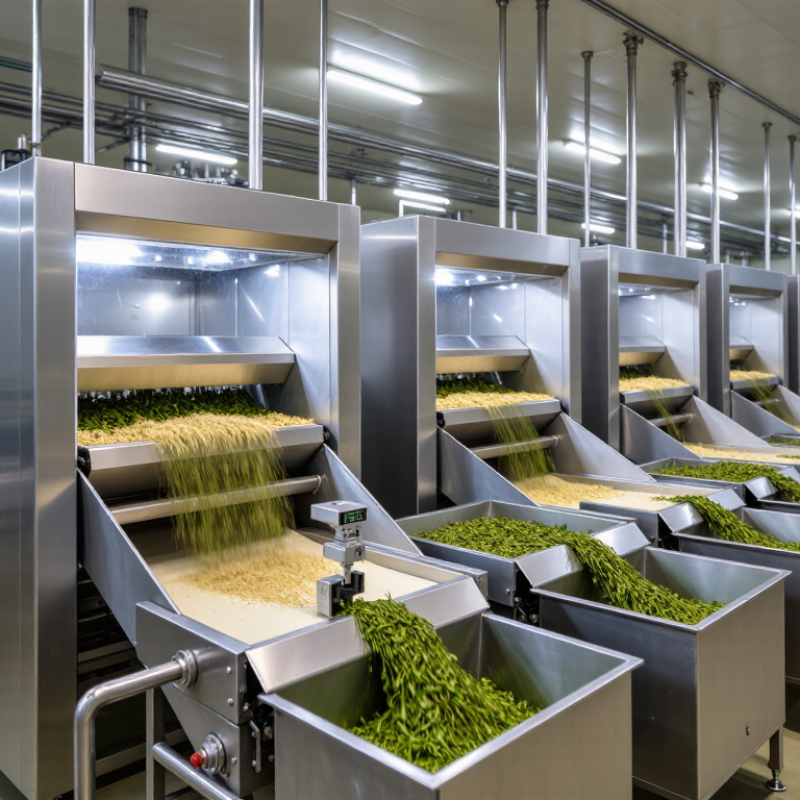
Tea sorting machines separate leaves by measurable differences after rolling and drying. Their purpose is practical: remove stalks, dust, uneven pieces, or foreign material, then create more consistent grades. A cleaner batch can improve handling and appearance, but sorting alone cannot guarantee flavor or cup quality. Small differences matter.
The principles vary by machine. Vibrating screens pass smaller particles through selected mesh sizes, while air classifiers use airflow to lift lighter fragments away from heavier leaves. Optical sorters inspect color and shape, then use timed air jets to eject selected pieces. Some lines combine these methods. On a working floor, operators may check a sample tray under steady light before changing settings; excessive airflow can carry good leaves away too.
Main classifications include screening machines, air separators, stalk or fiber removers, and optical color sorters. Buyers may also encounter density-based equipment and integrated multi-stage systems. Selection depends on leaf style, moisture, desired grade, and production volume. A machine that suits twisted black tea may handle delicate green tea poorly. Test representative batches, and record both acceptable-leaf loss and rejected-material levels. Settings need review. Real crops vary, and a neat specification sheet cannot capture every season’s differences.
| Machine type | Main sorting principle | Typical purpose and material | Common position in the process | Key selection consideration |
|---|---|---|---|---|
| 1. Vibrating screen grader | Vibrating mesh separates particles by size; multiple decks can produce several size fractions. | Grades dried tea by particle size and removes oversized pieces or fines, depending on the screen setup. | After drying or preliminary cleaning; often used before final blending or packing. | Mesh opening, number of decks, vibration settings, and the fragility of the tea being handled. |
| 2. Flat-bed screen sorter | Inclined or reciprocating screens classify tea using apertures and controlled movement. | Separates leaf grades and broken tea into size-based fractions. | Typically used for grading after initial drying or rolling and before detailed cleaning. | Screen layout and motion should match the leaf shape and the required grade sizes. |
| 3. Rotary drum screen grader | A rotating perforated drum separates material by size as it moves through the drum. | Screens bulk tea to remove fines or divide it into size fractions; configuration varies by product. | Used in bulk screening lines, commonly for relatively robust or free-flowing material. | Drum length, hole size, rotation speed, and the risk of leaf breakage or clogging. |
| 4. Air classifier or tea winnower | An adjustable air stream separates material according to aerodynamic behavior, including weight and drag. | Removes light dust, husks, and other low-density matter from tea; some systems also separate lighter leaf fractions. | Often installed after screening or as part of a cleaning and grading line. | Airflow control and dust collection are important for consistent separation and a clean working area. |
| 5. Tea stalk separator | Mechanical fingers, rollers, screens, airflow, or a combination separate stems from leaves. | Reduces visible stalk content in processed tea; the suitable method depends on leaf grade and stem characteristics. | Usually used during dry-tea refining, after coarse size grading. | Stem length, tea shape, required stalk-removal level, and acceptable loss of usable leaf. |
| 6. Optical color sorter | Cameras detect color or visual differences; timed air jets eject selected particles from the product stream. | Removes visibly discolored leaves and selected foreign materials when their appearance differs from acceptable tea. | Commonly used for final or near-final refining after the feed has been cleaned and distributed evenly. | Camera resolution, chute design, feed consistency, lighting, and the contrast between defects and good tea. |
| 7. Tea destoner | Airflow and a vibrating, porous deck separate dense particles from lighter tea. | Removes stones, soil clods, and other dense contaminants that may remain after harvesting or handling. | Used in cleaning stages when dense foreign matter is a concern; placement depends on the line design. | Deck settings, airflow, and feed depth must suit the tea's particle size and bulk density. |
| 8. Dust and fiber aspirator | Controlled suction draws away lightweight dust, fibers, and chaff from a falling or moving tea stream. | Improves cleanliness by removing light impurities; it is not intended to replace size grading or optical defect sorting. | May be integrated with screens, conveyors, or other cleaning equipment. | Suction strength, dust-filter capacity, and prevention of good tea being carried into the waste stream. |
| 9. Magnetic separator | A permanent magnet or magnetic assembly attracts ferrous metal contaminants. | Provides a safeguard against iron fragments from equipment wear or handling; it does not remove non-magnetic contaminants. | Installed at a suitable transfer point, often before sensitive downstream equipment or packaging. | Magnetic strength, product-layer thickness, cleaning access, and the placement of the unit in the line. |
| 10. Combined tea refining line | Combines methods such as screening, aspiration, stalk separation, and optical sorting in sequence. | Handles multiple quality targets, including size grading, removal of light impurities, stalk reduction, and visual defect sorting. | Designed around the required product grades and the incoming tea's impurity profile. | Match each stage to the actual feed, required product specifications, available space, and cleaning needs. |
Note: Tea sorting equipment and configurations vary by tea type, particle size, moisture, impurity profile, and required grade. Capacity and sorting accuracy should be confirmed using representative product samples and the intended operating conditions.


©Copyright 2020 Gosco Valves. All rights reserved.