China’s block-making sector is moving from basic hydraulic presses toward automated Block Forming Machine systems. Modern lines often combine calibrated batching, vibration control, pallet circulation, curing, and robotic stacking. These details influence output more than a catalogue’s headline capacity.
The Global Cement and Concrete Association estimates that people use approximately 14 billion cubic metres of concrete annually. The International Energy Agency also reports that cement production creates roughly 2.5 gigatonnes of direct carbon dioxide emissions each year. These figures make efficiency, material usage, and product durability important purchasing questions. A fast machine is not automatically a responsible investment.
Professor Paulo J. M. Monteiro, a respected concrete materials researcher at the University of California, Berkeley, has described concrete as “the most widely used material in the world, second only to water.” His observation supports a practical point: machine quality must be judged through finished blocks, not impressive brochures. This guide reviews China’s top 10 Block Forming Machine manufacturers through production stability, mould accuracy, energy use, automation, after-sales support, and export experience. Factory visits and verified customer references still matter. They are sometimes overlooked. Rankings also have limits, because one supplier may excel in small hollow blocks while another suits large-scale paver production. That is an unavoidable weakness, but it deserves honest attention.
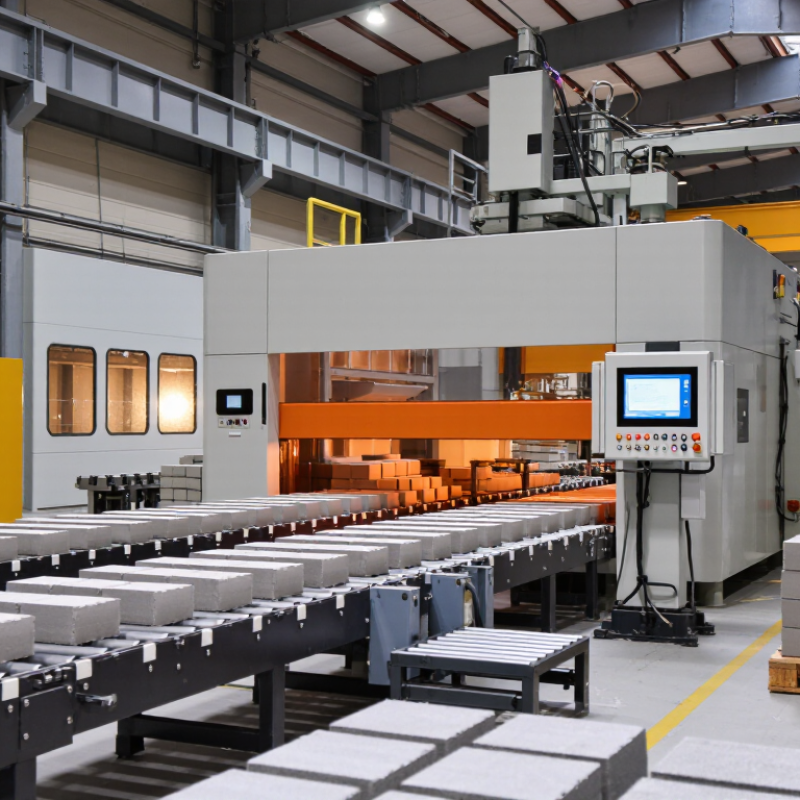
China’s block forming machine industry has developed from basic manual presses into automated systems for concrete masonry, paving blocks, and lightweight wall materials. Production lines now commonly combine aggregate batching, mixing, molding, pallet handling, and curing. Hydraulic pressure and controlled vibration help create denser blocks with more consistent dimensions.
Manufacturers serve different project scales. Small workshops may choose semi-automatic machines with simple molds and lower maintenance needs. Large plants often require automatic feeding, multiple pallets, and controlled curing rooms. Common material choices include cement, sand, gravel, fly ash, and recycled aggregates, depending on local standards and product design. Machine performance should be judged through test blocks, not brochures alone. A polished catalog can still hide uneven vibration or difficult mold changes.
Tips: Check daily output using your actual mix. Inspect block edges after curing. Ask about spare parts, operator training, electrical compatibility, and maintenance records. Factory visits are useful, but one visit cannot prove long-term reliability. Independent testing adds confidence. Buyers should also compare energy use, floor space, noise, and dust-control arrangements. These details affect operating costs more than many sales claims suggest. Industry rankings can change quickly, so the “top ten” should be viewed as a practical shortlist, not a permanent judgment.
Comparing manufacturers requires more than checking a ranking page. Start with production evidence, not attractive brochures. Ask for test reports, machine drawings, and recent customer references. A reliable supplier should explain vibration frequency, mold materials, cycle time, and expected block strength in clear language. Vague promises deserve caution.
Request a live factory demonstration using your preferred raw material. Observe the feeding system, mold change, hydraulic movement, and control cabinet. Measure the cycle time with a stopwatch. Check whether the finished blocks show cracks, uneven edges, or weak corners. Small defects can become expensive after thousands of cycles. A clean workshop helps, but it does not prove long-term reliability.
Review the complete cost. Include installation, spare molds, shipping, training, energy use, and maintenance. Ask how quickly critical parts can be supplied to your location. Examine the warranty terms carefully, especially response time and exclusions. During supplier interviews, technical staff should answer practical questions without avoiding uncomfortable details. I have found that confident sales language can hide limited engineering support. A factory visit may still reveal only a carefully prepared area. Request production records, service logs, and independent customer feedback. Also confirm compliance with applicable safety and electrical standards in your market. The cheapest quotation may be reasonable, but only after its assumptions are visible.
China’s Top 10 Block Forming Machine Manufacturers are often judged by engineering depth, production consistency, and after-sales support. A strong manufacturer should provide clear machine specifications, tested molds, and practical installation guidance. Factory experience matters. So does honest documentation.
The leading ten manufacturers typically serve projects producing concrete blocks, paving stones, hollow blocks, and retaining-wall units. Their equipment may include hydraulic presses, automatic material feeders, vibration systems, and programmable controls. Buyers should inspect steel frame quality, cycle time, mold replacement procedures, and power consumption. Small details matter. A loose sensor can stop an entire shift.
Reliable manufacturers usually offer sample production, operator training, spare-part planning, and remote troubleshooting. They should explain curing requirements instead of promising unrealistic output. Actual capacity depends on aggregate moisture, mix design, block size, and worker skill. Numbers on a brochure are not always production-floor results.
A careful ranking should also consider export experience, safety documentation, warranty terms, and response speed. However, no top-ten list is permanently accurate. Market conditions change, and a smaller factory may provide better technical attention for a specific project. My own assessment would require factory visits, machine trials, and customer feedback from similar climates. That step is sometimes overlooked.
| Rank | Manufacturer Category | Typical Machine Type | Automation Level | Typical Output | Main Products | Suitable Production Scale | Common Applications |
|---|---|---|---|---|---|---|---|
| 1 | Large-scale automatic equipment manufacturers | Fully automatic hydraulic block production line | High | 2,000–4,000 blocks per hour* | Hollow blocks, solid blocks, pavers | Large | Commercial plants and infrastructure projects |
| 2 | Medium-scale automatic machine manufacturers | Automatic stationary block machine | Medium to high | 1,000–2,500 blocks per hour* | Concrete blocks and pavers | Medium | Building-material production facilities |
| 3 | Paver-focused equipment manufacturers | High-pressure paver and brick machine | High | 700–1,800 pieces per hour* | Interlocking pavers, kerbstones, tiles | Medium to large | Roads, pavements, landscaping and municipal works |
| 4 | Hollow-block equipment manufacturers | Multi-purpose hydraulic block machine | Medium to high | 500–1,500 blocks per hour* | Hollow and solid concrete blocks | Small to medium | Residential construction and boundary walls |
| 5 | Small and medium enterprise equipment manufacturers | Semi-automatic hydraulic block machine | Medium | 300–900 blocks per hour* | Standard blocks and pavers | Small to medium | Local block yards and small contractors |
| 6 | Mobile equipment manufacturers | Mobile or egg-laying block machine | Semi-automatic | 200–700 blocks per hour* | Hollow blocks and solid blocks | Small | On-site construction and remote projects |
| 7 | Eco-friendly building-material equipment manufacturers | Low-pressure recycled-material block machine | Semi-automatic | 200–800 blocks per hour* | Non-load-bearing blocks and landscaping products | Small to medium | Recycled aggregate and sustainable construction |
| 8 | Custom-mold equipment manufacturers | Configurable mold hydraulic machine | Medium | 300–1,200 pieces per hour* | Special-shaped blocks, curbstones and tiles | Small to medium | Architectural, landscaping and customized projects |
| 9 | Export-oriented block-machine manufacturers | Containerized or modular block production line | Medium to high | 500–2,000 blocks per hour* | Blocks, pavers and kerbstones | Medium | International projects and rapidly deployable plants |
| 10 | Entry-level manual equipment manufacturers | Manual or hand-operated block press | Low | 100–400 blocks per hour* | Basic concrete blocks | Micro and small | Start-ups, rural projects and limited-volume production |
*Output figures are typical industry ranges and vary according to block size, mold configuration, concrete mix, cycle time, operator efficiency and curing conditions. The table compares common manufacturer categories and machine configurations without identifying individual companies or brands.
China’s leading block forming machine manufacturers serve projects from small yards to automated plants. Their ranges usually include hydraulic, vibration, and semi-automatic models. Hydraulic machines apply steady pressure for dense concrete blocks. Vibration systems help distribute material through the mold. Semi-automatic lines reduce labor while keeping investment manageable. Fully automatic lines connect batching, molding, curing, and pallet handling. This layout can produce hollow blocks, solid blocks, pavers, and curbstones.
A serious comparison should examine mold-changing time, motor efficiency, control accuracy, and spare-part access. Some lines produce 1,000 to 3,000 blocks per shift, depending on block size, mix design, and operator skill. Larger systems may exceed these figures under stable conditions. Production claims need testing. Ask for sample blocks, cycle records, and compressive-strength results. Sensors can monitor pressure, vibration, and pallet position. Remote diagnostics are useful, but local technicians still matter. Steel frames should resist repeated loading and dusty environments.
From practical factory assessments, curing space often limits output more than the press itself. A fast machine cannot create saleable blocks without consistent moisture and stacking. Energy use, noise, and maintenance schedules also affect the real cost. No machine is perfect. A lower-cost model may suit seasonal production, while a high-capacity line needs reliable orders and trained staff. Buyers should compare useful daily output, not impressive brochure numbers. Small details decide performance.
Choosing the right Chinese block forming machine manufacturer requires more than comparing catalog prices. Start with your product and site conditions. Define block dimensions, daily output, raw materials, curing space, and local power limits. A serious supplier should provide production samples, cycle-time records, mold drawings, and a clear acceptance test.
Check engineering depth and factory evidence. Ask to inspect a working line, not only polished videos. Review ISO 9001 records, welding quality, hydraulic components, spare-parts lists, and software support. Request references from projects using similar aggregates. According to the 2023 Global Status Report for Buildings and Construction, the sector created 37% of global energy and process emissions in 2022. Energy consumption, dust control, and material efficiency should therefore be part of the quotation.
Costs can mislead. Include molds, installation, operator training, shipping, maintenance, and downtime. The International Energy Agency identifies efficiency improvements as important for reducing cement-sector emissions. Ask for measured power use per production cycle, rather than a broad estimate. A factory may promise 20,000 blocks daily, but weak curing space can reduce usable output. This is where buyers often misjudge the project. Require written tolerances, warranty terms, remote troubleshooting times, and spare-parts availability. Independent inspections are worth considering before shipment. Mistakes remain expensive.
1272 Speers Rd Unit 4
Oakville ON Canada L6L 2X4
©Copyright 2020 Gosco Valves. All rights reserved.