A Polymer Surge Arrester is a compact guardian installed beside transformers, cables, motors, and other electrical equipment. It stays quiet during normal operation, then responds within microseconds when lightning or switching creates a dangerous voltage spike. Its polymer housing provides insulation, weather resistance, and useful mechanical strength. Inside, metal-oxide varistors conduct the surge current toward ground and limit the voltage reaching the protected system.
Thomas A. Short, author of the Electric Power Distribution Handbook, explains the practical purpose clearly: “An arrester protects equipment by limiting the voltage across it.” This principle is easy to visualize. During a storm, a surge may travel along an overhead line like a fast-moving wave. The Polymer Surge Arrester offers that wave a controlled path to earth. The equipment sees less stress.
The design is not magic.
Its performance depends on grounding, installation distance, leakage current, and system voltage. A poorly connected arrester may look correct but provide weak protection. That detail is often overlooked. Field inspections should check damaged housings, loose terminals, contamination, and signs of thermal stress. Polymer materials can improve safety after failure because they are less likely to shatter than traditional porcelain housings. Still, no arrester lasts forever. Moisture, repeated surges, and aging can reduce its protective margin. Understanding these limits helps engineers choose, install, and maintain the right device instead of treating a Polymer Surge Arrester as a permanent guarantee.
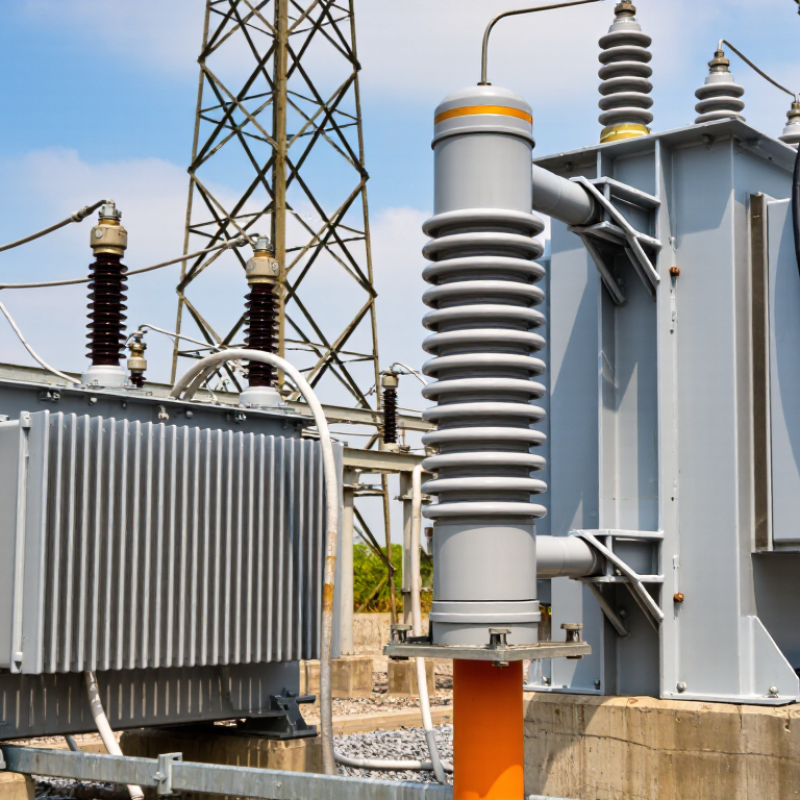
A polymer surge arrester is a protective device used on electrical power systems. It limits dangerous voltage spikes caused by lightning or switching events. Its outer housing is made from weather-resistant polymer, while metal-oxide blocks inside control the surge current. The device is usually connected between a conductor and ground.
Under normal voltage, the arrester carries very little current. When a sudden overvoltage appears, its internal resistance drops sharply. The surge then travels through the arrester and safely discharges toward ground. After the voltage returns to a normal level, the arrester resumes its high-resistance state. This process happens within microseconds.
Polymer housings are light, flexible, and less likely to break into sharp fragments than some traditional housings. Their ribbed surface also increases the leakage distance across wet or polluted conditions. In practical inspections, technicians check for cracks, burn marks, loose connections, and contamination around the housing. Small defects matter.
It is not a magic shield.
Correct voltage ratings, grounding, installation distance, and system coordination remain essential. An arrester that is poorly selected may fail during an ordinary fault, rather than a severe lightning event. Field conditions can also change its performance. Heat, moisture, pollution, and repeated surges gradually stress the internal blocks, so replacement decisions should rely on inspection records and measured system conditions, not appearance alone.
A polymer surge arrester has a simple-looking body, but each part controls electrical stress. Its main component is the metal-oxide varistor (MOV) block. Under normal voltage, the block carries only a small leakage current. During a surge, its resistance falls sharply and redirects energy toward earth. IEC 60099-4:2014+A1:2019 defines key tests using standard 8/20 microsecond current impulses and 1.2/50 microsecond voltage impulses.
The polymer housing surrounds the MOV column and provides outdoor insulation. Its weather sheds lengthen the leakage path across rain, dust, and salt. End fittings connect the arrester to the conductor and grounding system. Seals reduce moisture entry, while pressure-relief features help release internal gas during severe failure. Some designs include a line-disconnector, which separates a damaged arrester from the circuit. CIGRE Technical Brochure 549 emphasizes correct energy-duty selection, coordination, and temporary overvoltage assessment. That matters because a physically large arrester is not automatically safer. Installation height, grounding impedance, and nearby equipment change the real stress. Field inspections often reveal cracked sheds, loose earth leads, or contamination first. These details are easy to dismiss. That is a mistake. Polymer ageing is also difficult to judge visually, so leakage-current monitoring can support maintenance decisions, although it cannot replace laboratory testing.
| Main Part or Parameter | Typical Material or Value | Primary Function | How It Works | Important Design or Service Notes |
|---|---|---|---|---|
| Polymer housing | Silicone rubber, usually reinforced by an internal fiberglass structure | Provides electrical insulation, environmental protection, and mechanical support | The weather-resistant outer surface sheds water and helps limit surface leakage current | Compared with a porcelain enclosure, it is lighter and less likely to produce hazardous fragments if damaged |
| Metal-oxide varistor (MOV) blocks | Zinc-oxide ceramic blocks with nonlinear voltage-current characteristics | Limit transient overvoltage and divert surge current away from protected equipment | They have high resistance at normal system voltage and become highly conductive when surge voltage rises | The blocks normally operate without series gaps in modern gapless arresters |
| Internal grading and contact components | Conductive metal contacts, spring elements, and electrical grading components | Maintain continuous electrical contact and distribute voltage and current through the MOV column | The parts keep the varistor blocks aligned and connected while reducing localized electrical stress | Contact pressure and alignment are important for stable long-term performance |
| Top and bottom terminals | Corrosion-resistant metal connectors sized for the arrester duty | Connect the arrester between the energized conductor and the grounding path | During a surge, current enters through one terminal, passes through the MOV column, and exits through the other terminal | Connections must be tight, correctly sized, and installed according to the applicable installation standard |
| Pressure-relief and disconnector assembly | Thermal or pressure-operated separation mechanism, depending on design | Disconnects a failed arrester from the power system and helps control internal fault effects | If sustained internal current causes overheating or pressure, the mechanism separates the arrester from the circuit | It is a protective backup feature and does not replace correct system protection or grounding |
| Grounding lead and connection hardware | Copper or aluminum conductor with suitable clamps or lugs | Provides a low-impedance path for diverted surge current to earth | A short, direct grounding path reduces inductive voltage drop during the very fast surge event | Excessive lead length, sharp bends, or poor connections can increase the residual voltage seen by equipment |
| Mounting bracket or base | Galvanized or corrosion-resistant metal hardware | Secures the arrester to the structure and may provide a connection point for the grounding conductor | Maintains mechanical stability under vibration, wind, and short-circuit forces | The mounting arrangement must match the installation orientation and mechanical loading requirements |
| Rated voltage (Ur) | Specified in kilovolts (kV); selected for the system grounding and operating voltage | Defines the arrester's designated continuous operating capability and insulation coordination role | The arrester must withstand normal system voltage without excessive leakage or thermal instability | The correct rating depends on maximum continuous operating voltage, temporary overvoltages, and system grounding |
| Nominal discharge current (In) | Common distribution-class values include 5 kA and 10 kA, depending on the application | Provides a reference current for arrester testing and classification | The MOV blocks conduct the specified impulse current while limiting the voltage across the arrester | This is a test and classification value, not a continuous current rating |
| Residual or protective voltage | A specified peak voltage in kV at a defined impulse current | Indicates the approximate maximum voltage passed on to protected equipment during a surge | The nonlinear MOV characteristic clamps the surge instead of allowing the full impulse voltage to appear across the equipment | Lower protective voltage generally improves protection, provided the arrester is correctly coordinated with the equipment insulation level |
| Normal operating state | Very small leakage current, typically in the microampere to milliampere range depending on design and voltage | Allows the arrester to remain connected continuously without significantly loading the power system | The high resistance of the zinc-oxide blocks limits current at normal voltage | Increasing leakage current or visible housing damage can indicate aging, contamination, moisture ingress, or thermal stress |
| Surge response state | High impulse current for a very short duration, followed by automatic return to high resistance | Diverts lightning or switching surge energy to ground | The MOV blocks rapidly reduce their resistance as voltage rises, then recover their high-resistance state after the transient | Repeated or excessive surge energy can degrade the MOV blocks and shorten arrester service life |
Note: Electrical ratings and construction details vary by voltage class, system grounding method, environmental conditions, and the applicable technical standard. Always select and install an arrester using the manufacturer's tested ratings and the requirements of the relevant installation code.
A polymer surge arrester protects electrical equipment from sudden overvoltages caused by lightning or switching events. Its outer housing uses weather-resistant polymer, while metal-oxide varistor blocks control the electrical response inside. Under normal voltage, the blocks conduct only a very small leakage current. The arrester remains almost invisible in the circuit.
A surge changes that behavior within microseconds. The varistor blocks become highly conductive and create a low-resistance path toward ground. Excess energy then moves away from transformers, cables, and other connected equipment. The polymer housing helps maintain insulation, even when rain, dust, or salt contaminates the surface. Speed matters here.
Once the surge ends, the blocks return to their high-resistance state. This limits follow current and allows normal system voltage to continue. However, the arrester does not absorb unlimited energy. Repeated surges, poor grounding, or long-term thermal stress can damage its internal blocks. Field inspections often find loose connections or inadequate earth paths, not defective arresters. Installation details matter. Monitoring leakage current and checking housing cracks can reveal early deterioration. No protection device is perfect, and service conditions sometimes expose weaknesses that laboratory tests miss.
Polymer surge arresters protect electrical equipment from sudden overvoltages. They use metal-oxide elements inside a lightweight, weather-resistant polymer housing. During normal operation, the arrester carries minimal current. When lightning or switching creates a surge, its resistance drops sharply and redirects energy toward ground. The voltage then returns to normal within milliseconds.
Where are polymer surge arresters used? Utilities install them on overhead distribution lines, substations, transformers, cable terminations, and renewable-energy collection systems. They are especially useful in coastal, industrial, and high-lightning regions. The U.S. Department of Energy reports that weather-related events cause roughly 70% of power outages, making line-mounted protection important for grid resilience. On a pole, the arrester may sit beside a transformer, with a short grounding lead and a clear path to earth.
Wind farms and solar plants also use arresters near inverters, medium-voltage switchgear, and long cable runs. CIGRE technical guidance identifies lightning and switching operations as major transient sources in high-voltage networks. Installation details matter. A long ground conductor can increase residual voltage and reduce protection effectiveness. Field teams should check insulation coordination, grounding resistance, contamination, and available fault current. Selection is not always tidy. A device suitable for a clean substation may perform poorly in salt spray or heavy dust. Polymer housings resist shattering and reduce maintenance concerns, but aging, thermal stress, and installation errors still require periodic inspection.
Polymer surge arresters use metal-oxide varistors inside a sealed polymer housing. Under normal system voltage, the arrester carries only a small leakage current. During lightning or switching surges, its nonlinear resistance drops sharply and diverts surge current to ground, limiting the voltage applied to transformers, cables, and other equipment. The voltage levels below represent common utility applications; the final arrester rating depends on maximum continuous operating voltage, system grounding, insulation coordination, and fault conditions.
What Is a Polymer Surge Arrester and How Does It Work?
A polymer surge arrester protects electrical equipment from lightning and switching surges. Its metal-oxide blocks conduct surge current safely toward ground. Under normal voltage, the arrester remains almost nonconductive. When voltage rises sharply, its resistance drops within microseconds. The polymer housing adds insulation, weather resistance, and better performance in contaminated environments.
Selection must begin with the system’s maximum continuous operating voltage, not only its nominal voltage. Check the temporary overvoltage level, discharge energy, insulation coordination, and expected fault current. Pollution, coastal salt, industrial dust, altitude, and sunlight also affect the housing design. Choose suitable creepage distance and mechanical strength for the installation site. Short, straight grounding connections usually improve protection. A small mistake matters. An arrester rated too low may fail during normal disturbances, while one rated too high may provide weaker protection.
Maintenance requires practical records and careful observation. Inspect the housing for cracks, burns, chalking, loose connections, or water entry. Look for damaged grading rings and unusual stains near the pressure-relief area. During planned inspections, compare leakage-current readings with earlier records, preferably using calibrated equipment. Thermal imaging can reveal abnormal heating, but it should support, not replace, electrical testing. Clean contaminated surfaces only under an approved de-energized procedure. After severe lightning activity, inspect nearby arresters even when no damage is visible. Field judgment is valuable, yet memory is unreliable; dated photographs and test results often reveal gradual deterioration.
1272 Speers Rd Unit 4
Oakville ON Canada L6L 2X4
©Copyright 2020 Gosco Valves. All rights reserved.