Please upgrade your web browser now. Internet Explorer 6 is no longer supported.>

How to Find Reliable Custom Zinc Alloy Die Casting Suppliers

Finding a reliable Custom Zinc Alloy Die Casting supplier requires more than comparing online prices. The right partner must prove production capability, quality control, and consistent communication. A polished website is not enough.

In practice, experienced buyers examine the entire process. They ask about zinc alloy grades, casting machine capacity, mold design, and achievable tolerances. They also request recent samples, inspection reports, and clear surface finishing specifications. A dependable supplier should explain how it controls porosity, flash, dimensional variation, and cosmetic defects. These details often reveal more than a sales presentation.

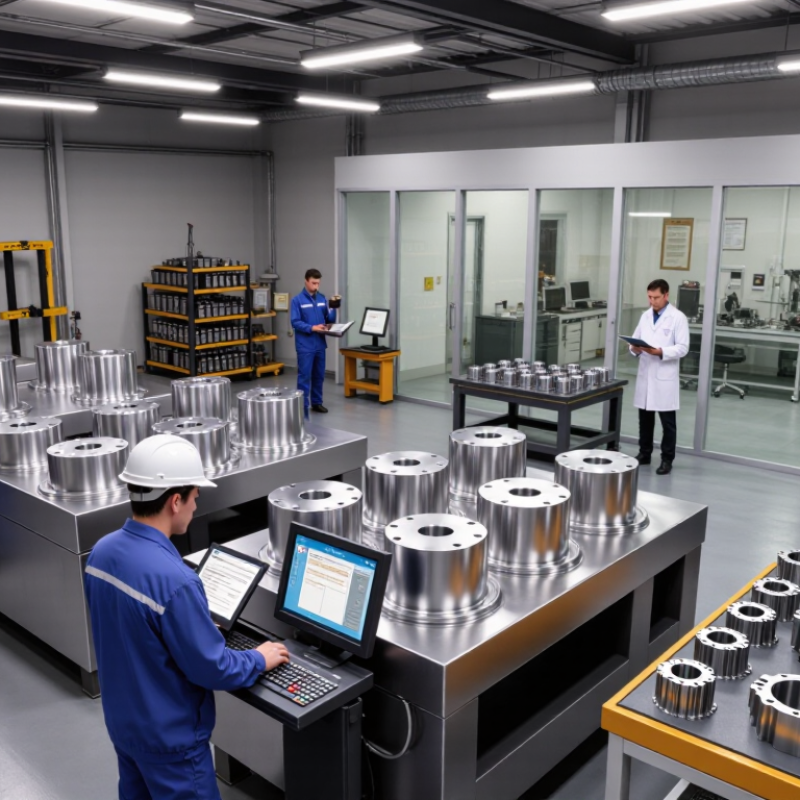
Factory verification can provide stronger evidence. Review the supplier’s equipment, tooling area, laboratory, and traceability records. Check whether operators use calibrated gauges, coordinate measuring machines, or documented sampling plans. Confirm production timelines with realistic capacity data, not optimistic promises. References from similar projects may also show how the supplier handles revisions, rejected parts, and urgent changes.

No supplier is perfect. That matters. Even a capable factory may misunderstand a drawing or underestimate tooling adjustments. A careful buyer should therefore begin with a technical review and a small trial order. Compare the approved sample with the first production batch. Record every deviation.

Reliable partnerships grow through evidence, not assumptions. By combining factory experience, engineering questions, quality documentation, and direct communication, companies can reduce costly surprises. The best Custom Zinc Alloy Die Casting supplier is not always the cheapest option. It is the one that consistently protects product performance, delivery stability, and long-term trust.
How to Find Reliable Custom Zinc Alloy Die Casting Suppliers

Define Your Zinc Alloy Die Casting Requirements

How to Find Reliable Custom Zinc Alloy Die Casting Suppliers

Define Your Zinc Alloy Die Casting Requirements

A reliable supplier cannot quote accurately from a vague sketch. Define the alloy grade, part weight, wall thickness, dimensions, tolerances, and expected annual volume. Zinc alloys support thin walls and detailed surfaces, but performance changes with alloy chemistry and section thickness. The International Zinc Association reports zinc die casting as a major application for precision industrial components. That matters when selecting material and production methods.

Specify the part’s working environment. Include temperature, load, corrosion exposure, assembly method, and surface finish. State whether the component needs plating, painting, machining, or leak testing. Use measurable requirements, such as a 0.05 mm critical tolerance or a defined roughness range. Avoid saying “high quality.” It means different things to different suppliers.

Request a design-for-manufacturing review before tooling begins. The supplier should examine draft angles, ribs, fillets, ejector locations, and likely porosity areas. NADCA die casting standards provide practical guidance for dimensional control and inspection planning. Ask for a control plan, material certificates, first-article measurements, and batch traceability. The 2024 USGS Mineral Commodity Summaries reported global zinc mine production at approximately 12 million metric tons, showing the material’s broad industrial scale, but raw material availability does not guarantee casting consistency.

I would not pretend the drawing is complete. Small details often change tooling costs. Send the 3D model, 2D drawing, tolerance chart, sample quantity, and packaging expectations. Then compare suppliers against the same technical checklist.

Verify Supplier Expertise, Equipment, and Production Capacity

Reliable custom zinc alloy die casting suppliers prove their ability through evidence, not polished promises. Ask for completed projects with similar size, tolerance, surface finish, and annual volume. Review samples under bright light. Check for pores, flash, uneven plating, and sharp edges. Experienced teams should explain alloy selection, die design, filling speed, and trimming methods clearly. Their answers must match production records, not vague sales language.

Ask to inspect die-casting machines, dies, CNC tools, polishing stations, and inspection equipment. Machine tonnage should suit your part’s projected area and weight. A crowded workshop may reveal scheduling risks. Confirm furnace temperature controls, die maintenance intervals, and gauge calibration dates. These details show whether quality depends on luck. It should not. Production capacity also requires evidence. Request monthly output, current utilization, shift patterns, and backup arrangements. Compare these figures with your forecast, including seasonal demand.

During a trial order, inspect first-article reports, dimensional data, and defect-handling records. Ask who approves process changes and how rejected parts are isolated. Traceability should connect each batch with material certificates and inspection records. Visit the facility when possible. Photos can hide delays, manual rework, or aging equipment. No supplier is perfect. What matters is honest disclosure and a measurable correction plan. A missed tolerance once may be understandable, but repeated excuses are not. Choose a team that demonstrates control before accepting a large commitment.

Assess Material Quality, Precision, and Quality Control Systems

Reliable custom zinc alloy die casting suppliers should prove material quality with traceable records. The USGS Mineral Commodity Summaries 2025 estimated global zinc mine production at about 12 million metric tons in 2024. Large supply does not guarantee consistent alloy chemistry. Request heat numbers, spectrometer results, recycled-content details, and certificates matching each production batch. Test samples independently when the housing carries electrical, structural, or safety-related loads.

Precision requires more than a polished sample. Review the supplier’s die design rules, machine capability, dimensional studies, and inspection methods. The NADCA Product Specification Standards provide practical guidance for die-casting dimensions, tolerances, and surface requirements. Ask for CMM reports on critical features, not only overall measurements. Check thin walls, threaded holes, parting lines, and flatness under production conditions. A supplier may achieve excellent first-article results and still drift later.

Quality control systems should connect prevention with evidence. The ISO Survey 2023 recorded 1,265,216 ISO 9001 certificates worldwide, showing broad adoption of quality systems. Certification helps, but it is not proof of strong daily control. Audit incoming zinc, melt temperature, pressure settings, porosity, coating adhesion, and corrective actions. I have seen impressive documentation hide weak sampling plans. That risk deserves attention. Compare defect data across several lots, verify calibration dates, and inspect the factory floor before approving production.

How to Find Reliable Custom Zinc Alloy Die Casting Suppliers

Benchmark criteria for assessing material quality, precision, and quality control systems

A reliable supplier should provide traceable alloy certificates and spectrometer verification, control dimensional accuracy according to applicable ISO 8062-3 casting tolerance grades, and maintain documented inspection systems such as CMM measurement, X-ray or CT inspection, process capability studies, and ISO 9001-based quality procedures. The scores shown are a practical screening benchmark rather than data from any specific company.

Reference framework: ASTM B86 zinc alloy die castings, ISO 8062-3 dimensional tolerances, and ISO 9001 quality management principles.

Compare Prototypes, Lead Times, Pricing, and Production Services

Reliable custom zinc alloy die casting suppliers should be compared through evidence, not attractive promises. Request prototype samples made with the proposed alloy and process. Inspect surface finish, parting lines, dimensions, and visible porosity. A prototype reveals more than a polished quotation. Ask for inspection records, material certificates, and clear tolerance data. Details matter.

Lead time should include tooling design, mold production, sampling, approval, and mass production. Some suppliers quote only the casting stage. That creates unpleasant surprises. Ask for a dated schedule with review points and possible delays. Confirm whether the supplier can manage trimming, deburring, machining, plating, painting, assembly, and packaging. A single production partner may reduce handoff errors, but only when process control is strong.

Pricing requires a line-by-line comparison. Review tooling charges, prototype fees, casting costs, secondary operations, inspection, packaging, and shipping terms. The lowest unit price may hide thin walls, unstable dimensions, or excessive finishing work. Request a small pilot run before approving full production. Production capacity also matters; examine machine tonnage, quality equipment, maintenance records, and corrective-action procedures. No supplier performs perfectly on every metric. I would reconsider any quotation with vague assumptions, missing tolerances, or an unusually short schedule. Ask why. A reliable supplier explains limitations clearly and adjusts the plan when test results expose weaknesses.

How to Find Reliable Custom Zinc Alloy Die Casting Suppliers — Compare Prototypes, Lead Times, Pricing, and Production Services

Supplier Profile Prototype Method Prototype Lead Time Tooling Lead Time Production Lead Time Typical Tooling Cost Indicative Part Price Common Zinc Alloys Production Capacity Key Services Best-Fit Application
Small-batch specialist 3D-printed pattern, CNC-machined prototype, or silicone tooling 5–15 business days 3–5 weeks 4–6 weeks after tool approval USD 2,000–8,000 USD 1.50–8.00 per part at 500–5,000 pieces Zamak 3, Zamak 5 Up to approximately 500,000 parts per year DFM review, prototype sampling, basic trimming, deburring, and dimensional inspection Product development, low-volume validation, and market testing
Integrated die-casting producer CNC-machined prototype or soft tooling for representative samples 10–20 business days 4–7 weeks 3–5 weeks after production approval USD 4,000–15,000 USD 0.60–4.00 per part at 5,000–50,000 pieces Zamak 2, Zamak 3, Zamak 5 Approximately 500,000–3 million parts per year Tool design, die casting, trimming, drilling, tapping, polishing, plating coordination, and inspection reports Commercial hardware, enclosures, fittings, and repeat production
High-volume automation supplier Production-intent samples from a multi-cavity die 15–25 business days 6–10 weeks 2–4 weeks after process validation USD 12,000–40,000+ USD 0.20–1.50 per part at 50,000+ pieces Zamak 3, Zamak 5, ZA-8 More than 3 million parts per year, depending on part size and machine allocation Multi-cavity tooling, automated die casting, robotic trimming, in-line inspection, and production traceability High-volume consumer, automotive, electrical, and industrial components
Precision and cosmetic-part supplier CNC-machined prototype followed by production-tool samples 10–18 business days 5–8 weeks 4–7 weeks after first-article approval USD 6,000–25,000 USD 1.00–6.00 per part at 10,000–100,000 pieces Zamak 3, Zamak 5 Approximately 1–2 million parts per year Surface-finish samples, polishing, plating, powder coating, laser marking, and cosmetic inspection Visible hardware, handles, decorative fittings, and consumer products
Engineering-led custom manufacturer Functional prototype using CNC machining, resin printing, or soft tooling 7–20 business days 4–8 weeks 4–8 weeks after engineering sign-off USD 5,000–20,000 USD 0.80–5.00 per part at 5,000–50,000 pieces Zamak 2, Zamak 3, Zamak 5, ZA-8 Approximately 300,000–1.5 million parts per year DFM optimization, tolerance analysis, mold-flow review, material consultation, testing, and engineering change support Complex parts, tight-tolerance assemblies, and products requiring design refinement
Full-service export supplier CNC-machined prototype or production-tool sample 10–20 business days 5–9 weeks 5–8 weeks, excluding international transport USD 4,000–18,000 USD 0.70–4.50 per part at 10,000–100,000 pieces Zamak 3, Zamak 5 Approximately 500,000–2 million parts per year Packaging, export documentation, third-party inspection coordination, surface finishing, and shipment consolidation Overseas sourcing programs and customers requiring managed logistics
Comparison note: The figures are typical industry planning ranges for custom zinc alloy die casting and are not quotations from named companies. Actual costs and lead times vary according to part weight, projected area, dimensional tolerances, die complexity, cavity count, finishing requirements, order quantity, testing, packaging, and shipping terms.

Confirm Certifications, Communication, and Long-Term Support

How to Find Reliable Custom Zinc Alloy Die Casting Suppliers

A reliable supplier should prove its quality system, not merely display a certificate. The ISO Survey 2022 recorded more than 1.2 million ISO 9001 certificates worldwide. That figure shows broad adoption, but certification alone cannot confirm zinc die casting expertise. Ask for the certificate scope, audit date, and manufacturing address. For automotive parts, verify whether IATF 16949 applies to the supplier’s actual facility. Request evidence of alloy traceability, dimensional inspection, porosity control, and surface-finish testing. A certificate can still hide weak process control.

Communication is equally important. The World Bank’s Logistics Performance Index 2023 highlights how shipment visibility and service reliability affect supply chains. Your supplier should provide clear tooling schedules, sample approval dates, inspection reports, and shipping updates. During technical discussions, check whether engineers explain draft angles, wall thickness, flash risks, and machining allowances with measurable details. Long-term support includes spare tooling plans, engineering-change notices, corrective-action reports, and stable documentation. One overlooked issue is response ownership. If every question reaches a different salesperson, accountability may disappear.

Tips: Send the same drawing and questions to three suppliers. Compare response time, technical depth, and document quality. Request a small pilot run before committing to volume. Keep one uncomfortable question: “What failed in your last similar project?” Honest hesitation may reveal more than polished presentations. Recheck certifications annually, because supplier capability can change quietly.