Please upgrade your web browser now. Internet Explorer 6 is no longer supported.>

How to Choose the Right Phase Regulator in 2026?

Choosing the right Phase Regulator in 2026 requires more than comparing rated voltage and purchase price. The correct device must match the load, grid conditions, operating environment, and future expansion plans. A regulator that performs well in a clean laboratory may behave poorly beside variable-speed drives, welding equipment, or long cable runs.

Roger C. Dugan, a recognized power-quality specialist, offers a useful principle: “Power quality is ultimately a customer-driven issue.” That reminder keeps selection practical. Measure the actual problem first. Check voltage fluctuation, phase imbalance, harmonics, transient exposure, and load sensitivity. Then compare regulation accuracy, response time, thermal capacity, bypass design, monitoring functions, and maintenance requirements. Small details matter. A hot enclosure can reveal an undersized unit before failure becomes obvious.

The best Phase Regulator is not always the most advanced model. Sometimes, a simpler design provides greater reliability and easier servicing. That judgment can be uncomfortable. Specifications alone do not guarantee performance. Installation quality, grounding, ventilation, and commissioning records can change the outcome significantly. Buyers should request test reports, certification evidence, warranty conditions, and documented performance under realistic loads. They should also question unclear claims. In 2026, smart monitoring and predictive diagnostics are valuable, but they should support engineering decisions rather than replace them. A careful selection process may take longer. It usually costs less than repeated downtime.
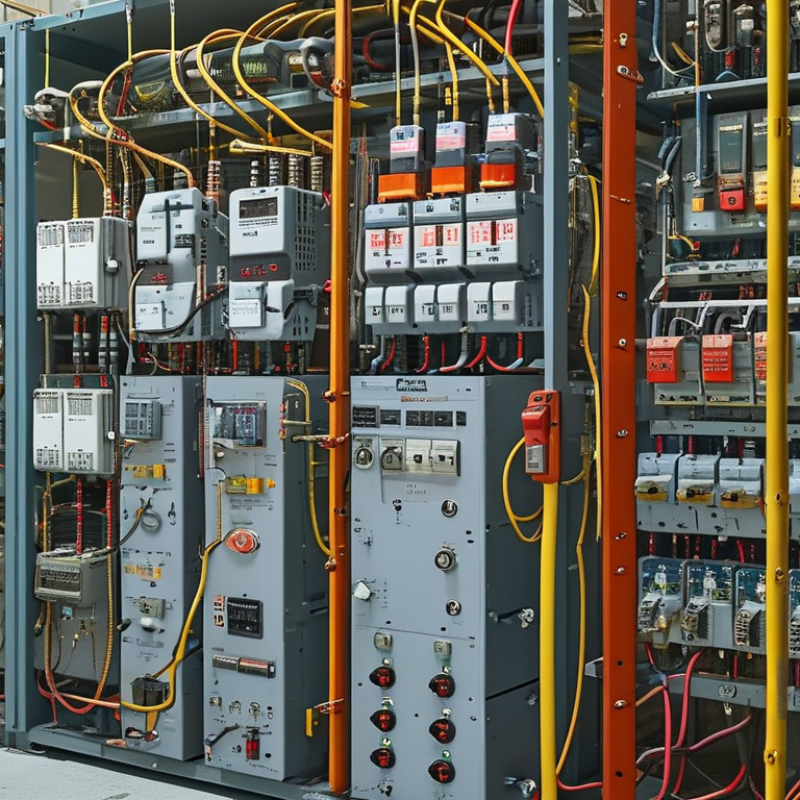
How to Choose the Right Phase Regulator in 2026?

Understanding Phase Regulators and Their Applications

How to Choose the Right Phase Regulator in 2026?

A phase regulator controls voltage stability across electrical phases. It helps protect motors, servers, pumps, and precision equipment from fluctuating supply conditions. In practice, selection begins with measurements, not catalog ratings. Record phase-to-phase voltage, neutral current, load variation, harmonics, and startup surges for at least seven days. A 2024 Lawrence Berkeley National Laboratory report estimates U.S. data centers used 176 terawatt-hours in 2023. Their demand may reach 325–580 terawatt-hours by 2028. That growth makes stable, efficient regulation increasingly important.

Match the regulator’s correction range to the site’s worst measured voltage. Check continuous current, overload capacity, response time, and thermal performance. For industrial motors, fast correction and high surge tolerance matter. For laboratories or server rooms, monitoring, low output distortion, and maintenance bypass deserve greater attention. IEEE 1159 provides a useful framework for evaluating power-quality events. IEC 60038 also helps verify nominal voltage compatibility. Do not rely on a single average reading. Averages can hide short, damaging dips.

Efficiency matters too. The International Energy Agency expects global data-center electricity consumption to exceed 1,000 terawatt-hours by 2026. Small losses can become expensive at this scale. Consider remote alarms, event logging, cooling requirements, and available service support. A technically correct regulator may still fail when installation space is tight. I have seen spreadsheets overlook cable heating and poor ventilation. That mistake is easy to repeat. Final selection should combine measured site data, independent test evidence, and a qualified electrical engineer’s review.

How to Choose the Right Phase Regulator in 2026?

Understanding phase regulators and their applications begins with the phase angle they must control. The chart below models a 50 Hz AC waveform with 0°, 15°, 30°, and 45° phase lag. The voltage is normalized to a peak value of 1.0 so the phase relationship can be compared independently of system voltage.

Choose a phase regulator by matching its required phase-shift range, voltage and current rating, response speed, harmonic performance, and cooling requirements. Mechanical phase-shifting transformers are suited to high-power grid applications, while solid-state regulators are typically preferred where fast dynamic control is required.

Identifying Voltage, Current, and Frequency Requirements

Choosing the right phase regulator in 2026 starts with three measurements: voltage, current, and frequency. A catalog rating is not enough. Record the line-to-line voltage, phase imbalance, peak current, and load behavior during startup. IEC 60038 defines standard voltage values, but real sites often show dips, surges, or uneven phases.

Voltage comes first. A regulator must match the nominal supply and correct the actual operating range. Check whether the equipment needs three-phase balance or independent phase control. Current sizing requires more than the nameplate figure. Motors, compressors, and power supplies can draw several times their running current during startup. IEA’s Electricity 2024 report forecasts global electricity demand to rise by about 3.2% annually through 2026, increasing pressure on aging distribution networks. More demand can mean more unstable voltage.

Frequency is equally important. Most systems operate at 50 or 60 Hz, and sensitive drives may tolerate only narrow deviations. Confirm the regulator’s frequency compatibility before installation. Measure with a calibrated power-quality analyzer, not a basic handheld meter. In commissioning work, I have seen acceptable voltage readings hide severe harmonic distortion. That mistake was expensive.

Choose capacity with headroom. Around 15% to 25% may be practical, but the correct margin depends on inrush current, duty cycle, ambient temperature, and future expansion. This is not a perfect formula. Recheck the measurements under the heaviest real load. Layered evidence beats confident guessing.

Comparing Phase Regulator Types and Control Methods

Choosing the right phase regulator in 2026 starts with the load profile, not the equipment catalogue. A phase regulator manages voltage balance, phase angle, or power flow across changing network conditions. The choice matters more as digital loads become less tolerant of disturbances. The International Energy Agency reports that data-centre electricity demand could exceed 1,000 TWh globally by 2026.

Mechanical tap-changing regulators remain practical for steady distribution networks. They offer proven durability and relatively simple maintenance. However, their response is slower, and frequent switching can increase wear.

Solid-state regulators respond within milliseconds and suit renewable-heavy feeders. They also create thermal-management and harmonic-control challenges. Hybrid designs can reduce these weaknesses, but installation decisions become more complex.

Control method often determines real-world performance. Local line-drop compensation works well when feeder behaviour is predictable. Remote control uses voltage sensors and communications, improving visibility but adding cybersecurity and communications dependencies.

Coordinated Volt/VAR control can manage voltage and reactive power together. The IEA’s Renewables 2024 report forecasts almost 5,500 GW of new renewable capacity between 2024 and 2030, making coordinated control increasingly important.

Mechanical phase-shifting transformers suit high-power, slower applications.

Power-electronic phase-angle regulators suit fast-changing flows.

I would not assume the fastest response is always better. Poor sensor placement can produce unstable commands. Field measurements should confirm the model before procurement. That step is often skipped.

Evaluating Efficiency, Compatibility, Safety, and Reliability

Choosing a phase regulator in 2026 requires more than comparing price and rated capacity. Efficiency starts with measured losses at actual loading, not laboratory claims alone. Ask for no-load losses, load losses, thermal rise, and performance across the full tap range. The IEA’s Electricity Grids and Secure Energy Transitions report estimates that over 80 million kilometres of grids must be added or renovated by 2040. Small efficiency losses can become expensive across that scale.

Compatibility deserves equal attention. Confirm system voltage, frequency, phase arrangement, neutral connection, fault current, control protocol, and available enclosure space. A regulator that fits electrically may still fail operationally. NERC’s 2024 Long-Term Reliability Assessment projects roughly 16% peak-demand growth across North America over the next decade. That pressure makes response speed, overload capability, and coordination with protection devices increasingly important.

Safety evidence should follow IEC 60076-21 testing requirements for step-voltage regulators. Check insulation levels, temperature limits, arc-control methods, grounding, emergency bypass operation, and maintenance access. Reliability depends on more than a strong cabinet. Review endurance test results, tap-change cycles, alarm records, spare-part support, and remote diagnostics. In field work, loose terminations and poor ventilation often cause trouble before major component failure. I would not trust a perfect efficiency number without site data. Real networks are rarely perfect. Performance should be verified after installation, during cold starts, heavy loads, and unstable voltage conditions.

Selecting the Right Phase Regulator for Installation and Maintenance

How to Choose the Right Phase Regulator in 2026?

Selecting a phase regulator starts with the installation, not the catalog. Record normal voltage, peak current, phase imbalance, fault level, and ambient temperature. Check feeder length and nearby distributed generation. Location changes everything. The IEA’s Electricity Grids and Secure Energy Transitions report says annual grid investment must rise from about 300 billion dollars to over 600 billion dollars by 2030. That pressure makes accurate sizing more important. Choose a continuous current rating above the measured peak load, not only the average. Confirm the regulator’s adjustment range matches both present and forecast voltage conditions.

Maintenance needs equal attention. Provide safe isolation points, visible bypass arrangements, and enough clearance for inspection. Confirm control cabinets tolerate dust, moisture, and seasonal temperature changes. NERC’s 2024 Long-Term Reliability Assessment forecasts North American peak demand growth of about 15% over the next decade. A regulator selected for today’s load may become restrictive sooner than expected. Measure twice. Install once.

During commissioning, record baseline voltage, tap position, temperature, noise, and contact resistance. Schedule thermal scans after the first high-load season. Inspect connections for discoloration or loose hardware. Review alarm history after every unusual event. A perfect datasheet match can still fail in a poorly ventilated enclosure. I have seen maintenance plans overlook control wiring, even when the power section was correctly sized. That assumption deserves review. Use documented test intervals, qualified personnel, and local electrical requirements before energizing the equipment.

How to Choose the Right Phase Regulator in 2026? - Selecting the Right Phase Regulator for Installation and Maintenance

Regulator Type Typical Voltage Range Typical Current / Power Range Phase-Angle Control Range Control Method Typical Response Time Cooling and Installation Maintenance Considerations Best-Fit Application
On-load tap-changing phase regulator 11–400 kV system classes Approximately 5–500 MVA, depending on design Usually ±10° to ±30° Motor-driven tap changer with automatic voltage or power-flow control Typically 1–10 seconds per tap operation Usually mineral-oil or ester-filled; requires a level, ventilated foundation and clearance for radiators Inspect tap-changer contacts, drive mechanism, oil condition, seals, bushings and control-panel alarms Transmission interconnections and large networks requiring continuous power-flow control
Off-load tap-changing phase regulator Up to approximately 145 kV system classes Approximately 1–100 MVA, depending on design Commonly ±5° to ±20° Manual or motor-assisted tap selection while de-energized Not intended for live automatic adjustment Oil-immersed outdoor installation is common; requires safe isolation and grounding before adjustment Low routine wear; verify tap position, insulation resistance, oil quality and mechanical interlocks Facilities with stable loading and infrequent phase-angle changes
Power-electronic phase-angle regulator Low-voltage to medium-voltage systems; commonly up to 36 kV module classes From tens of kVA to several MVA per system Often programmable from approximately ±5° to ±30° IGBT, thyristor or other solid-state converter control Milliseconds to a few cycles of the supply frequency Forced-air or liquid cooling may be required; provide clean airflow and harmonic-rated connections Check semiconductor temperature, cooling fans, capacitors, filters, firmware alarms and harmonic performance Fast control of renewable-energy interfaces, industrial loads and sensitive electrical networks
Single-phase distribution regulator Typically 2.4–34.5 kV primary systems Approximately 25–1,667 kVA per unit, depending on voltage and current Usually intended for voltage regulation; phase-angle adjustment is application-specific Automatic tap changer controlled by line voltage and load conditions Typically several seconds per tap movement Pole-mounted or substation-mounted oil-filled enclosure; confirm structural and safety clearances Inspect oil leaks, surge protection, bushings, control wiring and tap-counter operation Feeders with long lines, fluctuating demand or distributed generation
Three-phase balanced regulator Typically 6.6–33 kV distribution and industrial systems Approximately 0.5–20 MVA for common medium-voltage installations Commonly ±5° to ±20° when phase-shift control is provided Three-phase coordinated tap or converter control Seconds for tap-based designs; milliseconds for solid-state designs Indoor or outdoor installation; requires phase identification, balanced cable routing and adequate working space Test phase balance, winding resistance, insulation, control synchronization and thermal performance Industrial plants, data centers and networks where phase imbalance must be minimized
Compact dry-type regulator Typically 400 V–15 kV, depending on insulation design Approximately 50 kVA–5 MVA Usually limited; confirm the required angle range before selection Electronic control or de-energized tap selection Milliseconds for electronic control; manual for fixed tap arrangements Indoor installation with natural or forced-air cooling; keep vents unobstructed Clean windings and air channels, inspect terminals, check fan operation and measure insulation resistance Buildings, commercial facilities and locations where oil containment is undesirable
Selection note: The values shown are typical engineering ranges rather than universal limits. Final selection should be verified against system voltage, short-circuit level, continuous and emergency loading, required phase-shift range, insulation coordination, harmonic limits, ambient temperature, installation clearances and applicable local electrical standards.