How to Choose the Right Photoelectric Sensors for Your Needs?
In the world of automation, Photoelectric Sensors play a crucial role. A recent analysis by MarketsandMarkets indicates that the global photoelectric sensors market is projected to reach USD 2.03 billion by 2027, growing steadily at a CAGR of 8.1%. This growth reflects their increasing applications across various industries, including manufacturing and packaging.
Selecting the right photoelectric sensor can be challenging. Factors to consider include sensing distance and environmental conditions. Different applications may require specific types of sensors, such as through-beam, retro-reflective, or diffuse sensors. Understanding these options is vital for achieving optimal performance.
Additionally, the industry often faces challenges like sensor misalignment and environmental interference. It's important to be mindful of these issues when implementing photoelectric sensors in your systems. These complexities highlight the need for careful selection and application of these devices.
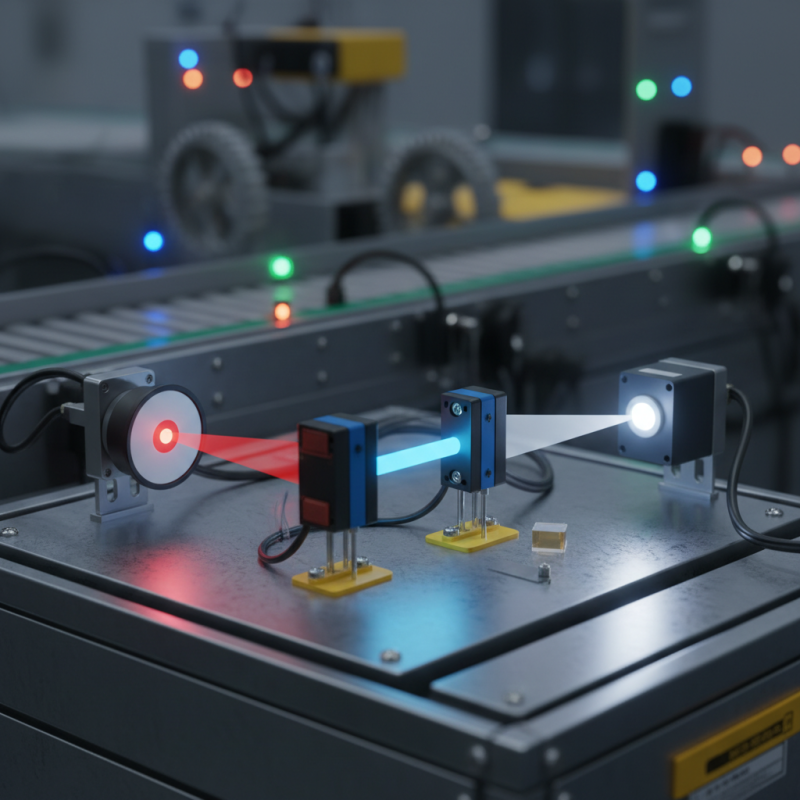
Understanding Different Types of Photoelectric Sensors and Their Applications
Photoelectric sensors come in various types, each serving unique purposes. These sensors can detect objects without physical contact, making them ideal for automation. The most common types include through-beam, retro-reflective, and diffuse sensors.
Through-beam sensors consist of a light emitter and a receiver. They are effective in long-range applications. Retro-reflective sensors use a reflector to bounce the light back to the receiver. This type works well in confined spaces. Diffuse sensors detect the presence of an object by measuring the light reflected from it. They are suitable for object detection at shorter ranges.
Understanding the application is crucial before choosing a sensor. Consider factors such as the environment, object size, and distance to ensure accuracy. Careful planning is key; overlooking these factors may lead to inefficiencies. Testing various options can help identify the best fit for specific needs. A thoughtful approach will lead to better outcomes in using photoelectric sensors effectively.
Understanding Different Types of Photoelectric Sensors and Their Applications
Key Specifications to Consider When Choosing Photoelectric Sensors
When selecting photoelectric sensors, key specifications can greatly influence your decision. One crucial factor is the sensing range. Depending on your application, the distance the sensor needs to detect an object may vary. Some tasks may not require long-range sensing, while others might. For example, a close-range sensor may suffice for an assembly line, but a longer range might be necessary for outdoor situations.
Another specification to consider is the response time. Different applications may need varying speeds for detection. A sensor with a slower response may delay production processes. Additionally, environmental factors play a significant role in performance. Sensors exposed to dirt, dust, or moisture may require specific housing or protection. Think about how these elements could impact your sensor's longevity and reliability.
Light source type also matters. Laser, infrared, or visible light sensors have unique benefits and drawbacks. Depending on the environment, one may perform better than the others. For example, a laser sensor can be precise but may struggle in certain light conditions. Reflect on which light source fits your specific needs best. It's essential to balance all these considerations carefully to make the best choice.
The Role of Environmental Conditions in Sensor Selection
When selecting photoelectric sensors, environmental conditions are crucial. Factors like dust, moisture, and temperature significantly impact sensor performance. For example, a 2022 industry report indicated that sensors operating in harsh conditions face a 30% higher failure rate. Understanding your environment can help you choose the right sensor type.
Dusty environments often require sensors with enhanced filtering capabilities. Sensors in wet conditions should have a higher IP rating to resist water ingress. A dusty installation may need frequent cleaning, while extreme temperatures could affect sensor accuracy. Consider operation ranges when making your choice.
Tip: Always test sensors in actual conditions before full deployment. This can reveal potential issues that lab testing might not showcase.
Paying attention to ambient light is another key factor. Some sensors are too sensitive and can trigger false positives. Others may not work at all in bright light. Assess the light levels in your workspace for optimal sensor performance.
Tip: If possible, use shading or housings to protect sensors from excessive light interference.
Reflect on potential challenges during your selection process. Neglecting environmental factors can lead to frequent downtimes and increased costs. Sensor choice is not just technical; it must align with real-world conditions.
Evaluating Response Time and Sensing Range for Optimal Performance
When choosing photoelectric sensors, understanding response time and sensing range is crucial. Response time affects how quickly a sensor reacts to an object or change in its environment. According to industry reports, many sensors on the market have response times ranging from 1 to 10 milliseconds. A faster response time is essential for applications that require high-speed detection, especially in automated systems. Slower sensors can lead to missed detections and inefficiencies, impacting production lines.
Sensing range is another vital factor. Most photoelectric sensors offer ranges from a few centimeters to several meters. Selecting the right range depends on application specifics. For instance, a short-range sensor may suffice in confined spaces, while long-range sensors are better for larger areas. In one study, about 30% of sensor failures can be attributed to improper sensing range selection. Therefore, evaluating the environment and potential obstacles is crucial.
An imperfect selection process is common. Many users overlook the importance of environmental conditions, such as dust or moisture. This oversight can drastically reduce sensor effectiveness. Additionally, not all sensors perform equally well in extreme temperatures. Data indicates that response times can increase by up to 20% in harsh conditions. Careful consideration of these factors is necessary for achieving optimal performance.
Industry Trends and Innovations in Photoelectric Sensor Technology
The world of photoelectric sensors is evolving rapidly. New technologies are enhancing their performance. For instance, advanced optics are improving detection accuracy. This innovation reduces false readings in complex environments. Industries are transitioning to smart sensors that communicate and adapt in real-time. These devices can learn from their surroundings.
Another trend is miniaturization. Smaller sensors open new possibilities for design. However, this can lead to unexpected challenges. Tiny sensors may struggle in harsh conditions. Users must consider these factors when selecting sensors.
Additionally, the integration of artificial intelligence is on the rise. AI enhances decision-making processes, but it complicates installation.
Compatibility with existing systems is crucial. Ensuring a seamless fit can sometimes be overlooked. Creating a harmonized setup demands careful planning. There is no one-size-fits-all solution. Taking the time to assess specific needs remains vital. Balancing innovation and practicality is an ongoing challenge. Users often grapple with new advancements while trying to maintain efficiency.


