Please upgrade your web browser now. Internet Explorer 6 is no longer supported.>

What Is the Best Type of Poly Pipe Cutter?

Choosing the best Poly Pipe Cutter depends on the pipe’s diameter, wall thickness, material, and the number of cuts you expect to make. A compact ratcheting cutter can handle many small-diameter pipes with little effort. Larger or reinforced pipe may call for a heavy-duty tool with a longer handle and a blade designed for clean, controlled cuts. The right choice helps prevent crushed edges, angled cuts, and fittings that refuse to seat properly.

Look closely at the blade, too. A sharp, replaceable blade matters when you are cutting several lengths in a row; a dull edge can leave a rough lip that needs extra trimming. In a cramped trench or utility room, the cutter’s handle clearance may matter as much as its cutting capacity. And there is a trade-off: a faster ratchet is convenient, but it can tempt you to rush.

I can’t verify a named industry expert’s published statement from the material provided, so I won’t invent a quotation. A practical rule is simple: choose a cutter rated for your pipe size, then check each cut for a square face and a clean edge. Test it on a spare piece first. Even a good tool can produce a poor cut when the pipe is unsupported or the blade is worn.
What Is the Best Type of Poly Pipe Cutter?

Define Poly Pipe Cutter Types: Ratchet, Guillotine, Rotary, and Saw

What Is the Best Type of Poly Pipe Cutter?

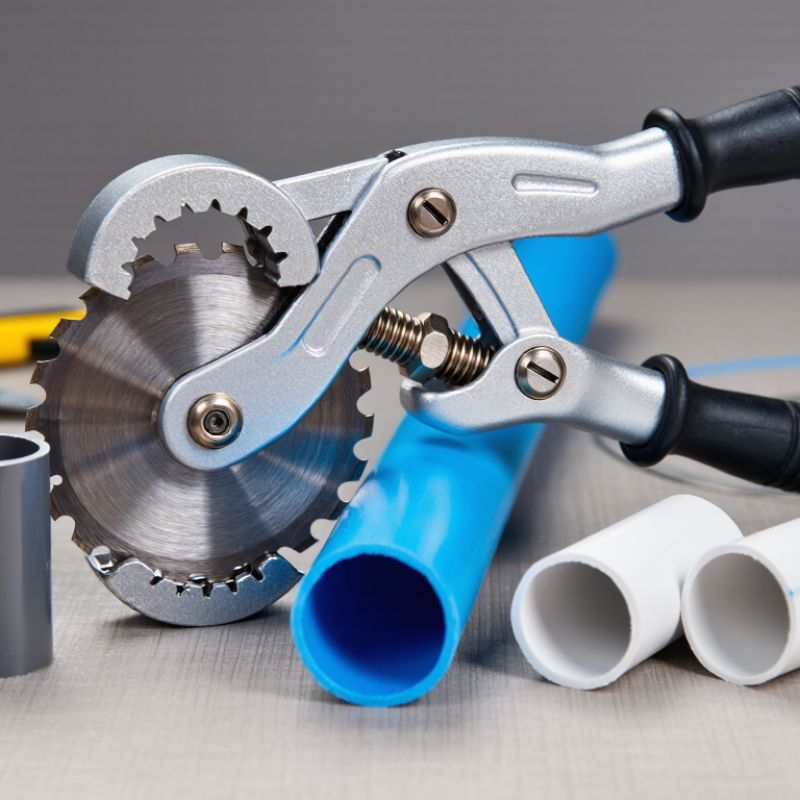
Poly pipe cutter types serve different jobs. Ratchet cutters use a squeezing action and work well on medium-sized polyethylene pipe. Their geared handles reduce hand strain during repeated cuts. The blade should close squarely, not diagonally. A clean edge helps fittings seat properly. I have found that a dull blade can crush the pipe before cutting it. That mistake is easy to miss.

Guillotine cutters push a sharp blade through the pipe with steady force. They suit larger diameters and thicker walls, especially when a stable cut matters.

Rotary cutters circle the pipe and remove material gradually. They are useful where access is limited, but the cut may take longer.

A saw can handle very large pipe or tough conditions. However, it creates chips and may leave a rough edge. That can require extra cleaning. No single type wins every time.

Tips: Measure twice, then mark the cutting line clearly. Keep the pipe supported near the cut. Use a sharp, clean blade and wear eye protection. Check the edge for flattening, burrs, or angled cuts. I sometimes prefer a saw when speed matters, though the finish is less precise. That trade-off deserves a second look. For critical connections, lightly smooth the edge without reducing its diameter.

Compare Cutting Accuracy Across PE, PEX, HDPE, and MDPE Pipe

What Is the Best Type of Poly Pipe Cutter?

Cutting accuracy changes across PE, PEX, HDPE, and MDPE. It depends on wall thickness, ovality, and pipe temperature. ASTM F876 defines PEX dimensions and pressure requirements. ISO 4427 covers PE pipe dimensions and performance. Neither standard certifies a cutter’s accuracy, which is an important limitation. A clean, square cut remains the installer’s responsibility.

For PEX and small-diameter PE, a sharp ratcheting shear cutter usually gives the cleanest result. PEX is flexible, so poor support can create a slanted cut or crushed opening. MDPE often needs controlled pressure because its softer wall can deform under a dull blade. HDPE is tougher and commonly has thicker walls. A rotary cutter or fine-tooth saw may perform better, especially on larger diameters. The Plastics Pipe Institute’s Handbook of Polyethylene Pipe identifies ovality and handling stress as practical concerns. In my experience, a cutter can look accurate but still leave a slightly angled face. That small error matters at compression fittings.

Tips: Support the pipe within a few inches of the cut. Mark the full circumference, not one side. Use a square or cutting guide. Replace blades when plastic begins whitening or tearing. Check the end against the fitting before assembly. ASTM D2513 and related polyethylene guidance also reinforce careful preparation for MDPE applications. A perfect cut is not always realistic, but a visible burr or crushed edge should never be ignored.

What Is the Best Type of Poly Pipe Cutter?

Comparative clean-cut accuracy across PE, PEX, HDPE, and MDPE pipe

The index uses a 100-point comparative scale, where a higher score indicates a cleaner, more square, and more repeatable cut when using a sharp ratcheting or wheel-style cutter. PEX generally cuts most cleanly because of its uniform, flexible wall structure, while HDPE can require more cutting force and careful blade alignment. Actual results vary with pipe diameter, wall thickness, temperature, tool condition, and operator technique.

Match Cutter Capacity to ISO 4427 OD Sizes and SDR Wall Ratios

What Is the Best Type of Poly Pipe Cutter?

Match Cutter Capacity to ISO 4427 OD Sizes and SDR Wall Ratios

The best poly pipe cutter matches the pipe’s actual outside diameter, not only its trade description. ISO 4427 pipes use defined OD sizes, while SDR identifies the wall relationship. SDR is calculated by dividing outside diameter by wall thickness. A lower SDR usually means a thicker wall and a harder cut.

Measure the pipe. Do not guess.

A compact ratchet cutter suits smaller OD sizes and lighter SDR walls. For larger ISO 4427 dimensions, a rotary, chain, or guided cutting tool offers better control. Check the cutter’s stated capacity against the measured OD. Leave practical clearance around the pipe, especially when gloves or cold conditions reduce handling precision.

The blade must stay square during the cut. A tilted blade can create a sloping end, damaged edges, or extra preparation work before electrofusion or butt fusion. I once trusted a nominal size marking without measuring the pipe. The cutter closed, but the cut was uneven. That small error could affect alignment.

Inspect the blade for dull spots and confirm that the frame supports the selected OD. Thick-wall SDR pipes may require more leverage, even when their outside diameter remains unchanged. Follow the tool maker’s capacity chart and the project specification. Standards and local procedures can differ by application, so verify the required end condition before cutting. Remove chips and check the cut face under good light.

Apply ASTM F2620 Preparation Standards Before Poly Pipe Fusion

What Is the Best Type of Poly Pipe Cutter?

Apply ASTM F2620 Preparation Standards Before Poly Pipe Fusion

The best poly pipe cutter depends on pipe diameter, wall thickness, and job conditions. For smaller pipe, a sharp ratcheting cutter can produce a controlled cut. Larger pipe usually needs a rotary cutter or saw with a guided cutting method. Avoid tools that crush the pipe wall. Deformation can affect alignment during fusion.

ASTM F2620 emphasizes clean, square, properly prepared pipe ends before heat fusion. After cutting, inspect the end under good lighting. It should look flat, round, and free from deep scratches. A clean-looking cut can still be slightly angled. That small error matters. Use a facing tool when needed to create matching surfaces before heating. Remove dirt with a clean, lint-free cloth. Do not touch the prepared ends with oily gloves.

Keep the pipe supported near the cutting area. This reduces movement and helps maintain a square cut. Measure twice. Cut once. Field conditions are rarely perfect, and even experienced installers can rush this step. I have seen sound equipment produce poor joints because the pipe was not supported properly. Cutter sharpness, blade alignment, and operator pressure all deserve inspection. Follow the current ASTM F2620 procedure and the pipe manufacturer’s approved fusion guidance for temperature, pressure, and cooling time.

Choose the Best Cutter by Pipe Diameter, Material, Safety, and Workload

What Is the Best Type of Poly Pipe Cutter?

Choose the cutter to match the pipe, not just the job title. For small-diameter polyethylene pipe, a ratcheting shear can make a controlled cut with one hand. Check its rated diameter and wall thickness first; oversized pipe can crush the jaws or leave a slanted end. The Plastics Pipe Institute’s Handbook of Polyethylene Pipe explains that SDR is the pipe’s outside diameter divided by its minimum wall thickness. That ratio matters: two pipes of the same diameter may need different cutting force. Measure twice. Cut once.

For larger diameters or repeated cuts, a rotary cutter or powered saw may be more practical, provided its blade suits the pipe material and produces a square end. Use the pipe maker’s joining instructions to decide how much trimming and end preparation are required. A ragged edge can complicate a connection.

What Is the Best Type of Poly Pipe Cutter? Choose by Diameter, Material, Safety, and Workload

Select a cutter rated for the pipe’s outside diameter and material. Capacity varies by tool design, so confirm the tool’s specifications and the pipe manufacturer’s cutting instructions before use.

Cutter Type Typical Pipe Diameter Suitable Materials Best For Advantages Limitations and Safety Overall Fit
Scissor-style pipe cutter Small-diameter pipe; commonly up to about 1 in (25 mm), depending on the model Flexible tubing and smaller PE or PEX pipe, when approved by the tool manufacturer Occasional household repairs and short cuts Compact, quick to position, and easy to carry Can deform or crush pipe if undersized, dull, or used with excessive force. Keep fingers clear of the blade and support the pipe. Best for light-duty, small-pipe work
Ratcheting plastic-pipe cutter Small to medium pipe; many models are rated around 1–2 in (25–50 mm), but capacities vary PE, PEX, and other plastics listed in the tool’s specifications Repeated cuts where a controlled, square cut is needed Ratchet action reduces the force needed per squeeze and helps maintain control Use only within the stated diameter and material range. A dull blade can leave a slanted or rough cut; wear eye protection. Best general-purpose choice for small-to-medium pipe
Manual rotary pipe cutter Medium or larger diameters, only when the cutter is specifically sized for the pipe Compatible plastic pipe, including some PE pipe; check the cutter’s rating Clean, controlled cuts on compatible pipe in the field Guided cutting action can produce a consistent cut with less risk of a wandering blade Requires the correct cutter size and setup. Do not use a cutter designed for metal if its instructions exclude plastic pipe. Good where the pipe and cutter specifications match
Fine-tooth hand saw with a cutting guide Medium to large pipe, including sizes beyond hand-cutter capacity HDPE and other saw-compatible plastic pipe Installation, repair, and occasional cuts on larger pipe Versatile and suitable for larger diameters; a guide helps keep the cut square Secure and support the pipe, keep hands away from the blade, and remove burrs or chips. Avoid excessive pressure that can distort the pipe. Best practical option for many larger-pipe cuts
Powered reciprocating saw or dedicated power cutter Large-diameter pipe; capacity depends on blade, tool, and access HDPE or other plastics only with a suitable blade and manufacturer approval High-volume work, confined installation areas, or large pipe Fast cutting with less manual effort on repeated or demanding jobs Vibration can cause an uneven cut. Secure the pipe, use eye and hearing protection, control the tool, and check for buried utilities before cutting installed pipe. Best for heavy workloads and larger pipe when properly controlled
Fine-tooth hacksaw Small to medium pipe, or occasional cuts where other tools are unavailable Many plastic pipe types, subject to the pipe maker’s instructions Basic repairs and low-volume work Widely available and inexpensive May cut slowly and wander without a guide. Clamp or support the pipe without crushing it; deburr and inspect the cut. Suitable as a basic backup tool